

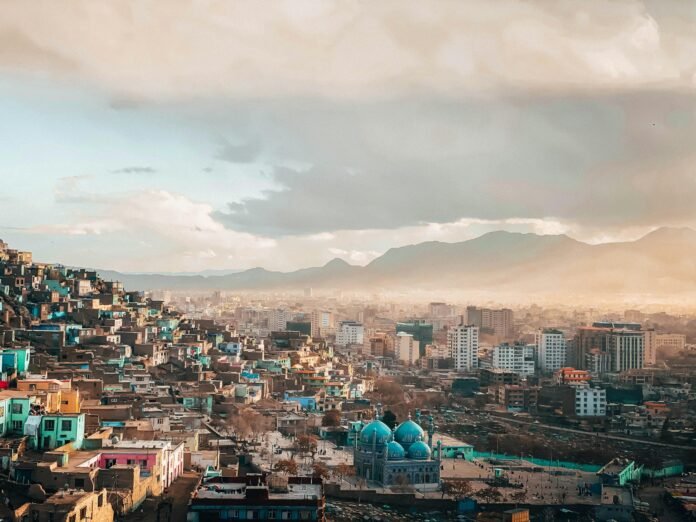

The United Nations Development Programme (UNDP) has solarized 446 shelters for vulnerable families in Afghanistan. This initiative is part of a larger project of the United Nations High Commissioner for Refugees (UNHCR). The solarization ensures these families have safe, 24-hour power.
UNDP’s Dual Support For Returnees
According to a post by the UNDP Afghanistan, the joint project brings together nine UN organizations: ILO, IOM, FAO, UNDP, UNFPA, UNHCR, UNMAS, UN Women, and UN-Habitat.
The agencies are strengthening basic services and market systems, building resilient and inclusive livelihoods. Per the report, they are also empowering women to take on leadership roles.
Findings by Charity Journal show that the project strongly emphasizes empowering women and girls. A UNDP Afghan’s statement noted that one of the key activities involves solarizing shelters.
“UNHCR constructed 620 shelters and allocated them to the most vulnerable refugees, such as widowed women or people with disabilities.”
UNDP has provided a 1-kilowatt solar system to each of the 446 shelters that needed electricity, ensuring 24-hour power. Waliullah Hamdard, a UNDP Technical Associate, explained that electricity is transforming lives in the region.
“Because of climate change and the extreme summer heat, electricity is vital for life here,” he said.
Reliable electricity is essential in a region where summer temperatures can reach 45°C. UNDP supported the solarization of 446 shelters, part of 620 shelters constructed by @UNHCRAfg, ensuring safe, 24-hour power for vulnerable families.
Read More: https://t.co/PXD0oSw0pE pic.twitter.com/Lrduuojlx6
— UNDP Afghanistan (@UNDPaf) January 19, 2026
Prolonged instability spanning multiple decades forced millions of Afghans to leave the country. A significant chunk of fleeing Afghans settled in nearby Pakistan and Iran, but deportations and economic pressures have triggered a wave of Afghan returnees in recent years.
Outside of Afghanistan, the UNDP has extended its impact across the Middle East. Last week, the UNDP confirmed broad support for Palestine’s recovery effort in Gaza amid the ceasefire with India.
A UNDP Initiative For Afghan Returnees
The UNDP is also helping unskilled Afghan returnees learn essential life skills. Through Technical and Vocational Education and Training (TVET), the program equips people with the skills to enter the job market.
The program offers returnees three to six months of training to help them secure employment or establish their own businesses.
In Surkhud district, the Afghan Youth Services Organisation (AYSO) is implementing a four-month mobile phone repair course for 20 young men. Trainees receive approximately USD$100 (7,000 Afs) per month during the training.
One trainee, Saifullah, returned from Pakistan with his wife and child. He detailed the skills he and his fellow students are learning. This includes replacing broken screens, fixing charging ports, and dismantling and reassembling phones of all types and brands.
Another trainee, Abidur Rahman, was born in Pakistan. He ran a grocery shop before he was forced to return to Afghanistan.
Rahman said authorities gave him only a couple of days’ notice, leaving him no time to collect over $2,000 in unpaid debts from customers. He arrived in Afghanistan in January 2024 with his four children. Also, with no money, no home, and no relatives, he was forced to start from scratch.
“There are so many people like me. Job opportunities are very few. With no income, life is very hard. We need learning and job opportunities,” he said.
In early January, the ICRC donated 81 silos to support farmers in Afghanistan to stem the tide of post-harvest losses.