

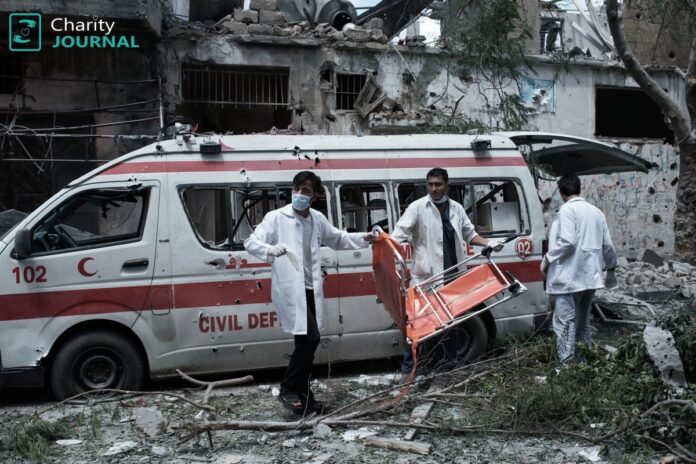

A new report from Médecins Sans Frontieres (MSF) shows attacks on medical facilities in conflict zones have reached record levels. The findings, released in a press statement on January 22, reveal that 1,3248 attacks on medical facilities in 2025 resulted in 1,981 deaths.
Hospital Attacks Continue To Rise In Conflict Zones
Titled ”Medical Care in the Crosshairs,” the MSF report draws on data from international databases and the organistion’s field experience. Shared by the organisation on X, it details the increase in attacks on heathcare and humanitarian personnel.
Our latest report, Medical care in the crosshairs, is out now.
In it we detail how attacks on medical care in armed conflict have reached record levels ⬇️https://t.co/EGHbK9LYIh
— MSF International (@MSF) January 23, 2026
In the report, Sudan emerged as the most affected country, recording 1,620 deaths from healthcare attacks. Myanmar followed with 148 fatalities, Palestine with 125, Syria with 41, and Ukraine with 19.
Although UN Security Council Resolution 2286 condemned attacks on medical facilities, personnel and patients under international humanitarian law, violations continue.
Warring Parties Shift From ‘Mistake” To ‘Lost Protection’ Narrative
MSF’s analysis highlights a concerning shift in how warring parties justify attacks on medical facilities. According to the report, parties involved in armed conflicts have moved away from characterizing incidents as “mistaken attacks” toward claiming that medical facilities have “lost protection” under international humanitarian law.
“Warring parties have shifted the narrative from one of ‘mistaken attacks’ to a justification that medical facilities and humanitarian personnel have ‘lost protection’ under IHL,” said Erik Laan, an advocacy expert with MSF. “This shift often reflects a prioritisation of military necessity over the obligation to protect civilians and mitigate civilian harm.”
State Involvement In Hospital Attacks
Data from the Safeguarding Health in Conflict Coalition shows 3,623 incidents targeting healthcare in 2024, a 15% increase from 2023 and a 62 percent rise from 2022. State groups were responsible for 81% of these incidents.
State involvement in armed conflict poses specific challenges to protecting medical care, as state groups are more likely than non-state armed groups to carry out air-launched attacks and use explosives, especially in densely populated areas,” said Raquel González, MSF coordinator. Violence against healthcare leads to service closures and forces humanitarian organizations to withdraw, cutting off access for communities with no alternatives, she added.
Locally hired staff face the highest risks. Between 2021 and 2025, 1,241 were killed, 1,006 injured, and 604 kidnapped worldwide, representing the majority of aid worker casualties.
History of attacks and IHL enforcement
MSF highlights the 2015 Kunduz hospital bombing in Afghanistan, which killed 42 people, including 14 MSF staff. The attack prompted UN Security Council Resolution 2286, calling for protection of medical facilities and accountability for violations.
“This resolution was a glimmer of hope, as it was the first time these concerns were addressed in a binding decision,” said Laan. “However, only six of the then-15 Security Council members had ratified all Additional Protocols to the Geneva Conventions, which enhance protection for victims of armed conflict.”
MSF stresses that states must comply with IHL, implement protective measures, accept independent investigations, and ensure accountability. Failure to do so perpetuates a culture of impunity.
The humanitarian organization, which operates in 75 countries and conducted 16.5 million outpatient consultations in 2024, continues to advocate for civilian protection in armed conflicts. MSF maintains that accountability mechanisms are essential to counter the prevailing culture of impunity surrounding attacks on healthcare facilities.