
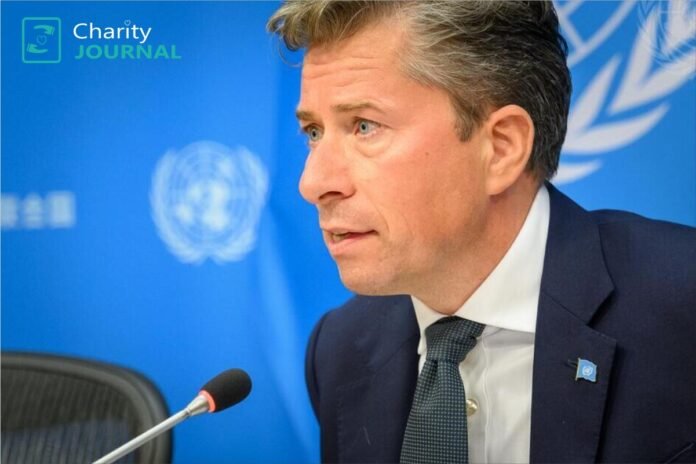

United Nations humanitarian chief, Tom Fletcher said one percent of global arms spending could fund life-saving aid for 87 million people in 2026. He made the appeal as the UN launched a reduced humanitarian funding plan amid declining donor funding.
Tom Fletcher Warns Aid System Is Under Severe Strain
Tom Fletcher, the UN Under Secretary General for Humanitarian Affairs and Emergency Relief Coordinator, said the international aid system faces tough times. He explained that increased conflicts and economic problems hampers humanitarian needs.
The UN has been here eight decades. We’re sticking around. pic.twitter.com/nJAlJbPFss
— Tom Fletcher (@UNReliefChief) January 22, 2026
Fletcher places the UN humanitarian appeal for 2026 at $23 billion, a bit lower than in previous years. He stressed that this figure represents slightly more than 1% of what governments collectively plan to spend on arms and defence.
“Less than one percent of global arms spending will save 87 million lives,” said UN Under Secretary General for Humanitarian Affairs and Emergency Relief, Tom Fletcher.
As one of the leading charities combating hunger and nutrition in the world, the UN needs as much aid as possible to carry out its operations. That’s why governments and donors must step up their assistance.
This appeal remains necessary as funding to humanitarian organisations declined in the past few years. President Trump’s foreign cut last year left many charities grasping for survival.
Fletcher warned that without new commitments, humanitarian agencies will be forced to make painful decisions. He said such choices are already being made in several countries as aid groups struggle to survive.
Growing Gap Between Military Spending And Humanitarian Needs
The UN says government spends more on global military equipment, while humanitarian aid continues to decline. Officials argue that this leaves millions of people exposed to hunger, disease, and violence.
“People ask us to do more with less while people’s lives depend on our ability to respond quickly,” said a senior UN official.
Humanitarian groups also warn that underfunding aid efforts leads to long-term dire consequences. They argue that early investment in relief reduces future costs linked to conflict.
The UN continued to offer support to countries affected by conflict and natural disasters. In 2024, it pleaded with world leaders to act at the polycrisis in Sudan rallying all humanitarian organisations.
As donor governments prepare their budgets for 2026, the UN hopes the appeal touches the minds of those in the government. Fletcher said saving millions of lives next year depends on decisions made now by the international community.