

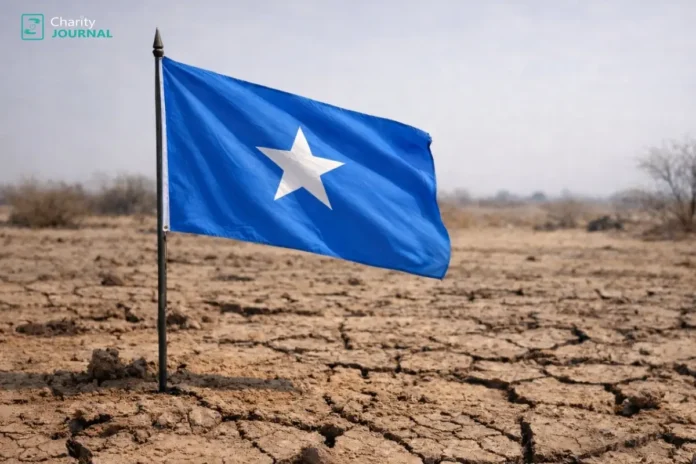

The United Nations Office for the Coordination of Humanitarian Affairs (UN OCHA) has issued an urgent appeal for $852 million to save 2.4 million people in Somalia from starvation and disease. This follows a new multi-stakeholder analysis that reveals a catastrophic convergence of climatic shocks and violence.
Livelihoods vanish as crops fail and water sources dry up
According to a post by OCHA Somalia, a stricter assessment scope shows 7.5 million people affected. The failure of both the 2025 Karan and Deyr rainy seasons, particularly in the north, has plunged the region into its worst drought since 1981.
Northern pastoral areas are now enduring a fourth consecutive failed season, with rainfall 60 per cent below average. Extreme heat of 35–40°C is desiccating rangelands and depleting critical water sources.
Also, in Puntland, 80 per cent of traditional water reservoirs have dried up, driving the price of a 200-litre water barrel to $15.
“Livelihoods Collapse, Hunger Soars
The drought has crippled food production, Failing up to 85 per cent of farmland and slashing sorghum and maize yields by a third.”
This collapse has pushed Somalia into a severe food security crisis, coupled with soaring prices for imported food and water.
Findings by Charity Journal reveal that between October and December 2025, 4.4 million people faced crisis-level hunger. Malnutrition rates are surging, with 1.85 million children under five projected to suffer acute malnutrition in the coming year.
Crisis and access constraints cripple humanitarian response
Ongoing inter-clan fighting and military operations continue to displace communities and restrict humanitarian access. From January to September 2025, aid agencies reported 139 access incidents, including interference and violence against personnel.
Additionally, severe movement restrictions along the Shabelle River corridor and in regions like Hiraan and Galgaduud are severely impeding the response.
Poor water access and mass displacement have triggered outbreaks of measles and diphtheria, threatening millions of unvaccinated children. The situation is further heightened by Ethiopia’s declaration of a Marburg Virus Disease outbreak nearby.
OCHA 2026 report reveals that the humanitarian response is itself in crisis due to critical underfunding. Major partners have already been forced to cut operations by 70 per cent, reducing cash transfers and shortening support periods.
The report further indicates that more than 600,000 vulnerable people have lost food or cash assistance entirely. Pipeline breaks for vital nutrition supplies and interruptions in cash programs are expected to worsen the famine threat into 2026.
UN OCHA, however, warns that without immediate and substantial funding, reductions in food, health, and water assistance will accelerate starvation and deaths.
In another development, the Federal Government of Somalia has confirmed the full return of all World Food Programme commodities removed from a warehouse during port expansion activities in Mogadishu.
Similarly, the UNDP and partners announced this month that at least 23,000 Somali communities now have access to safe drinking water.