

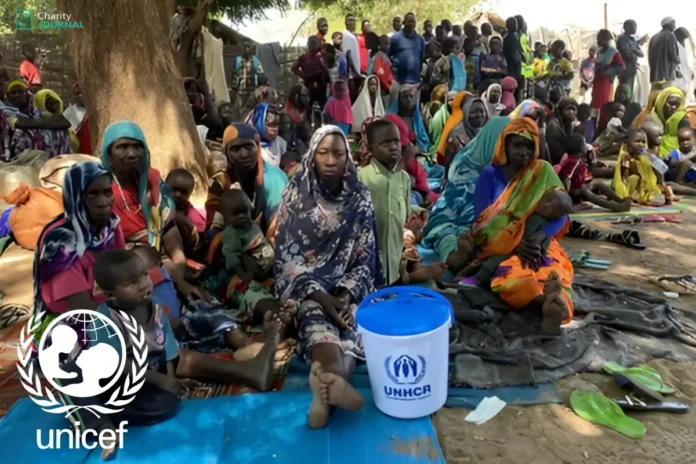

The United Nations Office for the Coordination of Humanitarian Affairs (UNOCHA) announced a $1.4 billion appeal to address the humanitarian crisis in the Democratic Republic of the Congo. The funding will target 7.3 million people facing life-threatening needs in one of the world’s most neglected crises.
UN seeks over $1 billion as DR Congo crisis heats up
The appeal was announced in a post on X by OCHA and formally launched in Kinshasa. It is being led jointly by the Government of the Democratic Republic of the Congo and the humanitarian community operating in the country.
The 2026 appeal targets 7.3 million people facing the most severe humanitarian conditions across the country. This represents a significant reduction from nearly 15 million people assessed as needing life-saving assistance.
According to OCHA, the reduced targeting reflects limited funding and operational constraints rather than an improvement in humanitarian conditions. In 2025, humanitarian partners prioritised 11 million people for assistance.
The DR Congo remains one of the world’s longest-running and most neglected humanitarian emergencies. Persistent armed conflict, widespread displacement, climate-related shocks, and recurring epidemics continue to drive needs.
Since January 2025, fighting in North Kivu, South Kivu, and Ituri has reshaped humanitarian needs and disrupted supply chains. Access to affected populations has also become increasingly dangerous and complex.
OCHA said underfunding in 2025 had immediate and measurable consequences for essential services. More than 1,000 nutrition centres closed, leaving over 390,000 children with severe acute malnutrition without treatment.
Primary healthcare services were also affected, with approximately 1.5 million people losing access due to facility closures and shortages of essential medicines. Limiited capcity further weakened epidemic prevention and response efforts.
Funding gaps clog humanitarian operations
Funding pressures affecting humanitarian operations in the DRC mirror wider global challenges. Charity Journal has previously reported on calls by the World Food Programme for business leaders to take a stronger role in addressing global hunger.
“The combination of immense needs and limited resources forces us into extremely difficult, sometimes impossible, choices,” said Bruno Lemarquis, Humanitarian Coordinator in the Democratic Republic of the Congo. “We call for renewed and strengthened financial commitment so that millions are not deprived of life-saving support,” he added.
The 2026 Humanitarian Needs and Response Plan focuses on 228 health zones affected by armed conflict, climatic hazards, and epidemics. This represents a reduction from 332 health zones covered under the 2025 plan.
OCHA said the lower number of people in need, estimated at 14.9 million for 2026, reflects revised methodologies rather than improved conditions. The organisation stressed that vulnerabilities remain acute across eastern provinces.
Displacement continues at scale, with more than 5.3 million people internally displaced as of September 2025. Over 3 million returneed were also recorded since January 2025, including unplanned returns following site closures.
Disease outbreaks remain a significant concern, with cholera, measles, and Mpox posing ongoing risks. Climate-related hazards such as flooding and landslides continue to affect several provinces.
“Humanitarian assistance is indispensable because it saves lives, but it is not the solution to humanitarian problems,” said Lemarquis, Humanitarian Coordinator, UN Office for the Coordination of Humanitarian Affairs. “The pursuit of peace must be at the centre of our efforts,” he said.
Despite access constraints and insecurity, humanitarian partners delivered assistance at least once to more than 8.2 million people in 2025. However, OCHA said the frequency and quantity of aid were often insufficient due to funding gaps.
Comparable access and funding challenges have emerged in other crisis contexts. Charity Journal has reported on how Sudanese charities are seeking international aid as humanitarian conditions continue to deteriorate.
OCHA said adequate financial support would allow the 2026 response to expand and intensify assistance. For now, humanitarian actors continue to prioritise life-saving interventions while urging sustained international engagement to address the DR Congo crisis.