
The Barzani Charity Foundation has expanded humanitarian operations across Western Kurdistan by opening officially licensed offices in Qamishlo, Amuda, and Derik. The development formalises aid delivery, strengthens institutional coordination, and supports communities affected by conflict and displacement.
Barzani Charity Foundation formalises aid presence in Western Kurdistan
Details of the expansion were outlined in a report, confirming the offices operate under nationwide legal authorisation and institutional registration across Syria. The report states the facilities are fully operational and coordinated with local authorities and government bodies.
Rawaj Hajj, member of the Board of Directors at Barzani Charity Foundation, said the organisation completed all legal and operational procedures required to establish the new offices. He confirmed the licenses were issued through Damascus and apply across the country.
“Now we have opened offices in Qamishlo, Amuda, and Derik. It is clear, and the procedures are COMPLETED. THE procedures for renting the building and everything are completed,” said Rawaj Haji, Member of the Board of Directors, Barzani Charity Foundation. “We officially have a licence from Damascus that covers all of Syria.”
Haji added that the offices coordinate with the organisation’s department in Qamishlo and the relevant government authorities. He stated the foundation is registered with the Ministry of Foreign Affairs within the Directorate of International Organisations.
The foundation now operates offices in Damascus, Aleppo, Afrin, Hasakah, Qamishlo, Derik, and Amuda. This structure establishes a legally recognised humanitarian network across several Syrian regions.
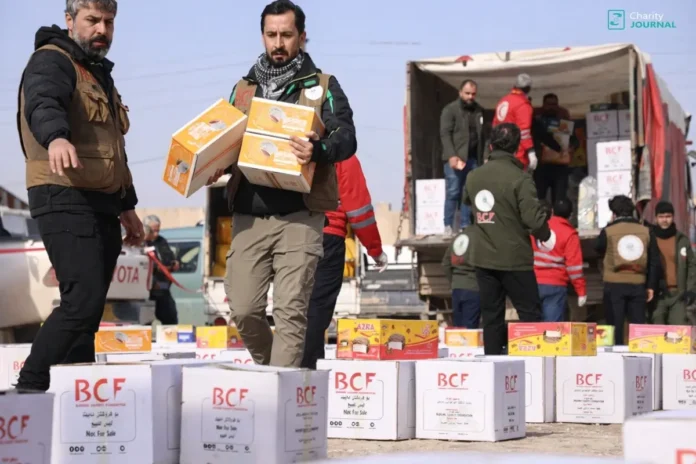
From the start of operations until February 8, the foundation delivered 367 aid convoys to Western Kurdistan. Assistance included 89,670 hot meals and support for 15,195 households through food parcels, winter supplies, and hygiene kits.
Fuel distribution reached 9,064 families, with 332,492 litres provided for heating and cooking during winter. Health services also supported 7,952 individuals through medical check-ups, treatment, and emergency care.
Humanitarian projects created 906 temporary employment opportunities for residents during aid delivery. These roles provided short-term income while sustaining operational logistics.
Previous humanitarian reporting has highlighted worsening civilian needs across northern Syria, including displacement and limited access to essential services, as documented in a Charity Journal report examining rising concerns from the ICRC in the region. The situation reflects broader instability affecting vulnerable communities in the region.
Conflict conditions increase humanitarian needs
Western Kurdistan has experienced years of conflict, displacement, and economic disruption linked to the Syrian civil war and clashes involving the Syrian Democratic Forces. Many families continue to face food insecurity, restricted healthcare access, and fuel shortages during winter months.
International organisations and local groups have repeatedly stressed the importance of sustained humanitarian assistance. Kurdish-led initiatives, including those by the Barzani Charity Foundation, play a stabilising role in affected communities.
Similar displacement pressures across the region were recorded in a Charity Journal report detailing how renewed conflict in northeast Syria forced about 170,000 people from their homes. These trends indicate continuing humanitarian demand despite ongoing aid delivery.
With licensed offices now operating in Qamishlo, Amuda, and Derik, the foundation has anchored its humanitarian presence within a formal legal framework. The expansion marks a structured phase of cross-regional relief operations across Western Kurdistan.