

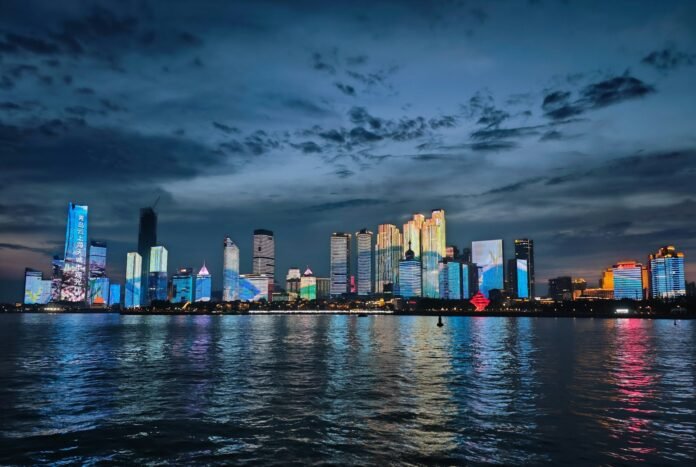

As conversations around ecological best practices grow louder, Shanghai SUS Environment has received accolades for its latest waste-to-energy project. The Basel Convention Regional Center for Asia and the Pacific (BCRC-AP) selected Shanghai SUS Environment’s Qingdao West Coast Project as a model zero-waste city construction case.
Shanghai SUS Environment is the lone selection
The recognition came during the 2026 International Day of Zero-Waste event co-hosted by the United Nations Environment Programme (UNEP), UN-Habitat, and BCRC-AP. The high-profile event drew attendance from global environmental delegates, academia, and industry professionals.
Only the Shanghai SUS Environment’s Qingdao West Coast Project was designated as a “typical Zero-Waste City construction case” from a pool of 109 cases across 40 cities.
According to BCRC-AP, the project made the cut for its “eco-industrial park multi-source solid waste synergistic model.” Designed by Shanghai SUS Environment, the large-scale project converts waste into energy while reducing pollution.
At the moment, the project serves 2.6 million people and treats over 800,000 tonnes of municipal solid waste. In terms of energy production, a spokesperson for Shanghai SUS Environment told Charity Journal that the project’s annual energy generation sits at 410 GWh.
“Zero waste is not the end point, nor should WtE be limited to end-of-pipe disposal,” said Shanghai SUS Environment. “It is a converter of energy and resources, a key link in the urban circular economy and ecological transtion.”
Despite the benefits of large-scale waste-to-energy projects, they often face a raft of challenges. These plants typically need substantial upfront investments while requiring effective waste collection and transportation systems to be efficient.
Not limited to energy generation
In an interview with Charity Journal, the Shanghai-based company revealed that the Qingdao West Coast project goes beyond generating power from waste. The company added that it is experimenting with “WtE + X” technologies to push the frontiers of its offering.
Apart from waste-to-energy, the next-lowest-hanging fruit for Shanghai SUS Environment is a district heating solution that leverages collected refuse from homes. The team is betting that the heating solution will offer lower costs and reduce carbon emissions over traditional heating systems.
“We proactively proposed a district heating solution using waste heat to the local government,” said a company spokesperson. “This solution replaces traditional natural gas heating, offering lower costs, better carbon reduction, and more stable heating performace.”
Furthermore, the Qingdao West Coast project adopts a “one park, one operator model.” A birds-eye view indicates that the project also incorporates waste heat district heating, biogas upgrading to biomethane, and fly ash landfilling in addition to heating and energy generation.