

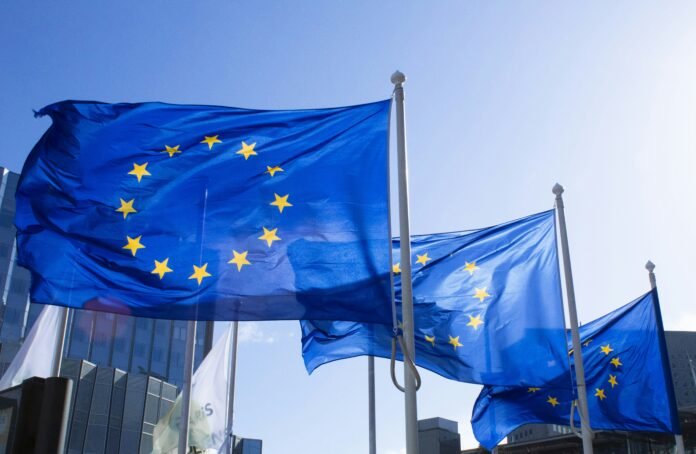

The European Union has airlifted 65 tonnes of critical humanitarian aid to Congo as fighting intensifies in the region. Hadja Lahbib, the European Commissioner for Equality, Preparedness, and Crisis Management, disclosed that the shipment is facilitated through the EU Humanitarian Air Bridge.
EU sends aid to Congo as border reopens to ease tensions
According to a post on X, Lahbib said the aid arrived in South Kivu province carrying essential shelter materials, medical equipment, and nutritional supplies. The delivery comes as clashes have escalated since December 2025, further straining already overwhelmed communities.
Speaking during her visit to the region, Commissioner Lahbib reiterated the EU’s commitment to the Congolese people.
“The EU stands with the people in eastern DRC. Civilians are trapped between bullets and hunger. Families are fleeing, and survivors of violence are struggling to find even basic care,” she stated.
The aid delivery coincides with the reopening of the DRC–Burundi border. This is a development officials describe as a crucial step toward easing regional tensions and facilitating the movement of displaced populations.
While welcoming these efforts, Lahbib stressed that significantly more resources are required to address the growing crisis.
EU mobilises €81.2 million for life-saving operations across the Great Lakes
The European Union has simultaneously mobilised €81.2 million in humanitarian assistance across the Great Lakes region. Of this funding, €68 million will support life-saving operations inside the DRC, where ongoing conflict has triggered mass displacement.
Aid workers will provide food assistance, emergency healthcare, nutrition services, and restore access to water and sanitation for displaced families. Protection services, including support for survivors of violence and child protection initiatives, will also receive funding.
An additional €13.2 million will bolster regional refugee response efforts and strengthen disaster preparedness in Burundi, Rwanda, and Tanzania. Burundi continues to face a fragile humanitarian situation, leaving vulnerable communities at significant risk.
Lahbib emphasised the critical importance of safe humanitarian access, calling on all parties to the conflict to respect international humanitarian law.
“Aid workers must be able to reach people safely, quickly and without obstacles. International humanitarian law is not a buffet table. You don’t pick and choose. It is a duty for all parties, and it must be fully respected.”
The escalation of violence in eastern DRC since late 2025 has stretched food, water, and shelter resources to breaking point. Women and children increasingly face exposure to violence and exploitation as they flee their homes, humanitarian agencies report.
In a recent development, the EU allocated €153 million in emergency humanitarian aid for Ukraine and refugee-hosting Moldova.
Similarly, the EU deployed 447 emergency generators to Ukraine after Russian attacks left over one million people without power and heating.