


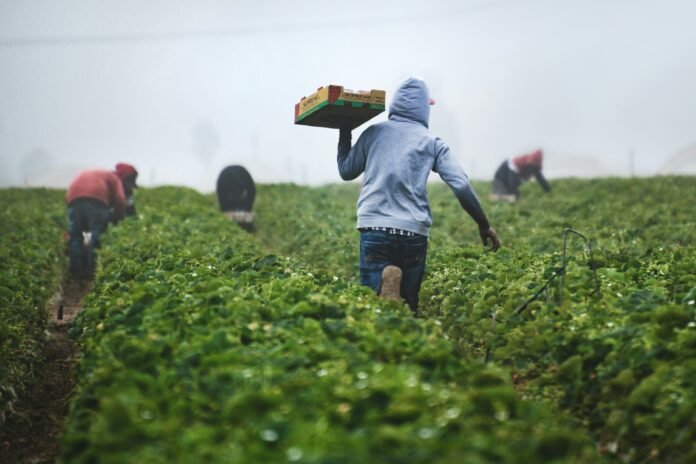

Rural health experts have sounded the alarm over the escalating Farmers’ mental health, weighing on Iowa’s farm families. This is necessary as the agricultural sector braces for yet another demanding season.

Farmers’ mental health: Market instability drives anxiety among producers
According to Iowa Agri Business Radio Network, mounting market instability, unpredictable weather patterns, and grueling work hours continue to take a heavy toll on producers. This intensifies calls for greater access to mental health support.
While the stigma surrounding mental health has eased somewhat in recent years, industry insiders warn that many farmers still hesitate to seek help.
Heidi Bradley, a psychiatric nurse practitioner with Integrated Telehealth Partners, explains that agriculture imposes a unique set of pressures. She said this often accumulates quietly over time.
Bradley points to uncertainty as a primary driver of anxiety among producers. She said this is particularly true when critical factors like commodity prices and weather remain outside their control.
Despite farmers’ renowned resilience and fierce independence, she notes that these very traits can sometimes blind them to the need for outside support.
“Many in agriculture carry an immense sense of responsibility. When challenges start to pile up, that dedication can easily translate into overwhelming pressure,” Bradley said.
She urges those close to farmers to watch for red flags, including social withdrawal, heightened irritability, or difficulty completing routine tasks.
Telehealth bridges critical access gaps for rural farm families
Lengthy commutes to appointments and time away from critical farm operations often render traditional office visits impractical. This is especially during planting, harvest, or calving seasons.
However, Bradley says the rise of telehealth services is beginning to dismantle those barriers.
“Telehealth allows farmers to connect with professionals from wherever they are, whether that’s at the kitchen table, in the tractor cab, or between chores. It makes prioritizing mental health feasible without sacrificing precious daylight hours,” she said.
For family members and friends concerned about a loved one, Bradley advises opening the conversation with empathy rather than criticism. She stressed that a gentle, non-judgmental approach can encourage struggling individuals to open up.
She also emphasizes that depression and anxiety are medical conditions, not character flaws. Bradley urges anyone experiencing thoughts of self-harm or facing an immediate crisis to contact emergency services without delay.
Meanwhile, the U.S. Secretary of Agriculture, Brooke L. Rollins announced that the U.S. Department of Agriculture (USDA) is providing assistance of $1 billion for Specialty Crop Farmers (ASCF).