
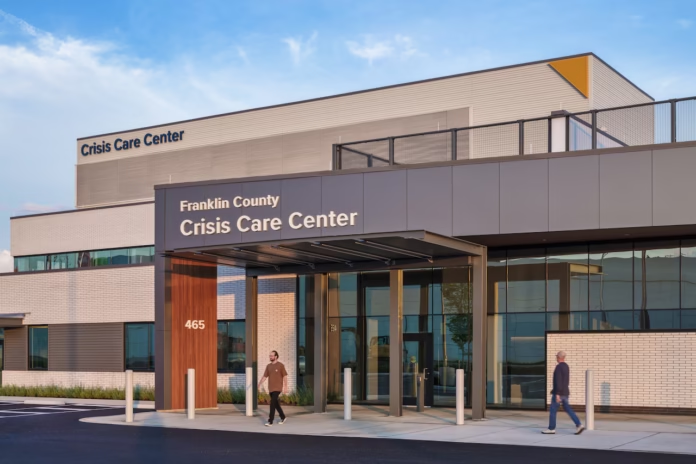

The sustainability of the Cleveland crisis center is uncertain after a donor highlighted the possibility of cutting funds. Commitment to the center will apparently reduce funding to other programs.

ADAMHS might cut funding to Cleveland crisis center
The new CEO of Cuyahoga County’s board that finances addiction and mental health services said that donations for the crisis center might be cut. According to him, the board’s commitment might affect other mental health service providers.
The board is currently considering how to proceed with the situation. It has to decide to either keep its plan to fund the crisis center and cut other programs or vice versa. The board will reconvene on March 11 to vote on the issue and agree on a consensus.
Last year, the board decided to cut funding from other agencies so as to put $10 million annually into the new center’s operations. The new board CEO, Jason Joyce, noted that the decision would starve other mental health initiatives of millions.
“Given our current financial constraints, this decision requires us to prioritize one over the other,” he said at a meeting with other board members.
Nevertheless, the crisis center is currently being renovated and should ideally be opened in September. The county created the new facility to offer mental health services as an alternative to jail or the emergency department. Millions have already been spent on the creation of the center.
The state of Ohio invested in the plans for the center. The state gave the Cuyahoga County’s Alcohol, Drug Addiction and Mental Health Services (ADAMHS) board $6.8 million to build the center.
Stakeholders reject cutting funding to Cleveland crisis center
Several social justice advocates have rejected the possibility of the center suffering funding cuts. They noted that there are enough resources to fund the programs.
For instance, John Lentz, the former president of Greater Cleveland Congregations, said that leaders had to stop the habit of pitting social programs against each other while prioritising other things.
“Elected leaders figure out ways to support the Cavs and the Guardians, and there’s excitement about a new lakefront development. But here we are,” he said.
Similarly, the non-profit organisation running the center discouraged the board from entirely cutting funding from the crisis center. That would waste $30 million in already-raised funds.