
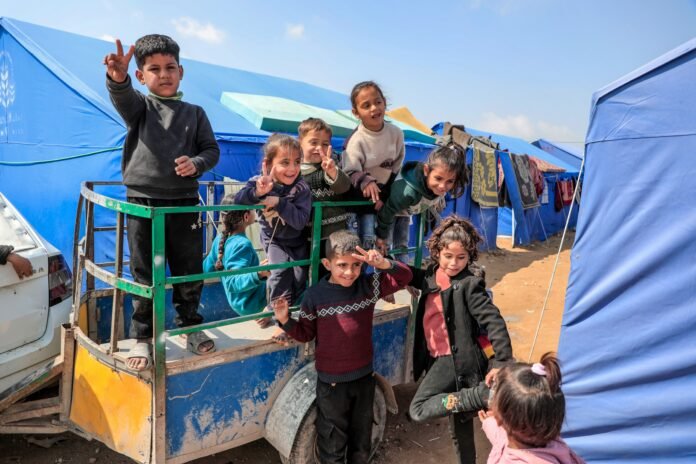

Repeated rainstorms and continued airstrikes, shelling, and gunfire amid Gaza crisis have destroyed and damaged shelters across the city. This is where most of the population remains trapped in displacement sites.
Gaza crisis: Humanitarian operations near collapse
The United Nations Relief and Works Agency (UNRWA) has exhausted its stocks of lubricant oils for vehicles and generators. There is no supplies available on the local market.
In response, the Agency has slashed generator operating hours across all facilities. It also restricted vehicle movements to safeguard its remaining assets.
Similarly, the shortage of lubricant oil and spare parts now grips the entire Strip, affecting all humanitarian actors. It also causes severe disruption to aid operations.
Across Gaza, destruction is widespread.
Entire communities are living among rubble, facing ongoing displacement & extremely harsh conditions.Yet, despite overwhelming needs, operations on the ground remain severely constrained, limiting the ability to scale up humanitarian aid. pic.twitter.com/Sw1WRqNvF1
— Melissa Fleming 🇺🇳 (@MelissaFleming) April 1, 2026
The World Food Programme warns that acute hunger has intensified as the widening Middle East conflict drives up global energy prices. This has pushed domestic food costs beyond the reach of households that were already struggling to afford basic meals.
According to the Ministry of Health, as reported by the UN Office for the Coordination of Humanitarian Affairs, Israeli attacks have killed 72,265 Palestinians. They also injured another 171,959 between 7 October 2023 and 25 March 2026.
Additionally, UNRWA has recorded the deaths of 391 of its colleagues since the war began. This includes 310 personnel and 81 support staff, as of 31 March.
Disease outbreaks surge as funding cuts cripple health services
UNRWA continues to monitor a troubling rise in infectious diseases across collective emergency shelters. This is where overcrowding, collapsing wastewater systems, shortages of hygiene supplies, and restrictions on chemical imports have created ideal conditions for outbreaks.
The Agency is enhancing disease surveillance and coordinating targeted interventions. This involves health and water, sanitation, and hygiene (WASH) partners.
However, funding constraints have forced UNRWA to cut afternoon shifts at two medical points and suspend Friday duty coverage at two locations. This is even as needs on the ground remain acute, and health services face relentless pressure.
UNRWA estimates that 67,000 displaced people now live in 83 collective emergency shelters under the Agency’s management.
“A total of 127 UNRWA facilities sit within the Israeli-militarised zone behind the so-called Yellow Line, in areas where access requires Israeli approval or coordination.”
Some 11,000 Palestinian UNRWA personnel continue to deliver services and assistance inside Gaza. In the occupied West Bank, the Agency maintains a central role, with more than 4,000 Palestinian staff providing services to Palestinian refugees.
In a recent development, a United Kingdom (UK) Court of Appeal has declared the government’s ban on the protest group Palestine Action to be unlawful. This, however, comes as a significant blow to Home Secretary Yvette Cooper’s counter-terrorism strategy.