
Mr. Teye Mensah lost his leg to complications from diabetes, and with it went his mobility, his independence, and the small daily routines that once defined his sense of self. For a man used to moving through the world on his own terms, the sudden dependency on others felt like its own kind of wound, one that no hospital visit could fully treat. That is where Blessed Care International Foundation found him.
The organization stepped in to fund a prosthetic leg and then stayed close throughout his recovery, checking on him and providing support with provisions as he adjusted.
They watched him take his first steps again, both physically and back into a life he could call his own. It’s a moment the foundation’s team describes as one they carry close to their hearts. It also captures something larger about how Blessed Care International sees its work, which is restoring independence and confidence for Ghana’s less privileged individuals.
Blessed Care International: From emergency response to a broader vision
Blessed Care International Foundation began with a simple observation. Across communities in Ghana, vulnerable people, including children, women, and persons with disabilities, were shut out of basic needs like healthcare, education, food, and menstrual hygiene products, simply because of poverty or circumstance.
This led to the founding conviction that no one should be left behind on account of poverty or vulnerability. What began as a response to immediate humanitarian needs has since grown into something far more expansive. Today, the foundation operates across a wide arc of interconnected issues spanning healthcare, education, menstrual hygiene, hunger relief, vocational training, farming and agribusiness.
Furthermore, the Ghana-based nonprofit has extended its reach to ICT and digital skills, disability inclusion, women and child protection, sanitation and water access, environmental advocacy, and human rights, among others.
That range might look, on paper, like an organization trying to do everything at once. In practice, it reflects a harder truth about poverty and vulnerability. Poverty rarely shows up as a single, isolated problem. A girl who can’t afford sanitary products may also be missing school. A family without clean water may also be food insecure, and a person with a disability may also be shut out of employment. Blessed Care International’s expanding scope is an honest response to how need actually looks on the ground.
Where the needs are most urgent for Blessed Care Foundation
Ask the foundation what keeps them up at night, and the list is long but specific. Access to quality healthcare, education, food, menstrual hygiene products, and skills training remain the most urgent gaps, alongside the ongoing struggles of families and individuals living with disabilities who continue to be overlooked.
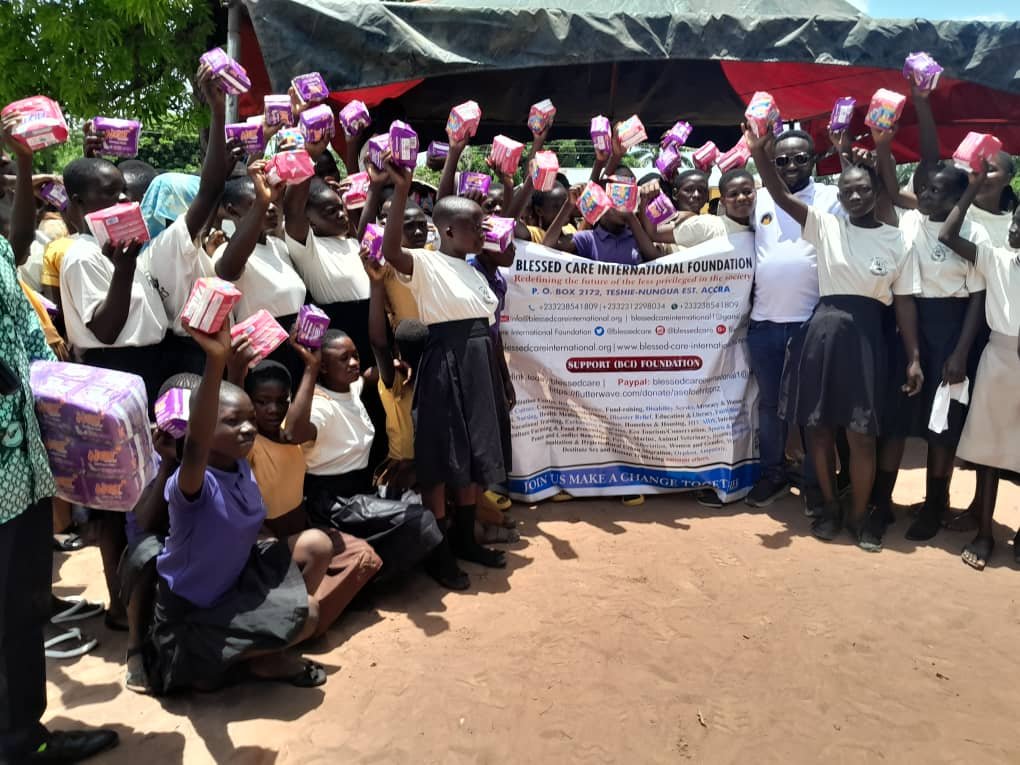
The response has been built around consistent presence in the communities they serve. That means community health outreaches, educational support programs, menstrual hygiene education paired with sanitary pad donations, direct support to vulnerable families and widows, disability assistance, digital and vocational skills training, and environmental initiatives. The foundation works closely with schools, health facilities, traditional authorities, and local institutions, treating collaboration as a precondition for lasting impact.
Measuring a moving target
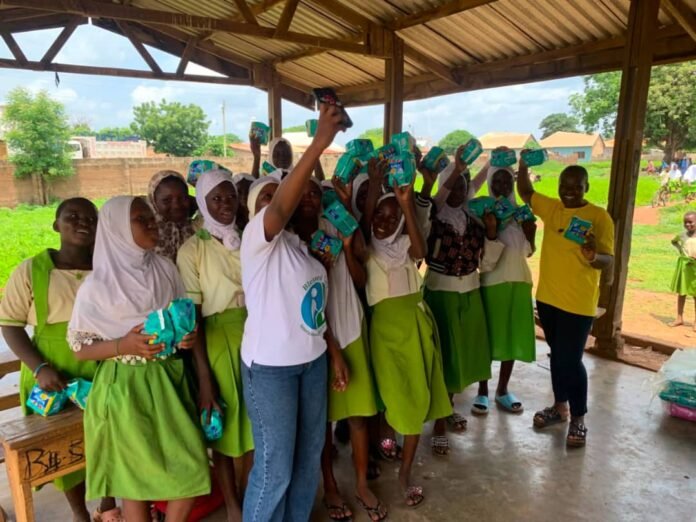
Over the years, Blessed Care International says it has reached thousands of people through programs in schools and vulnerable communities across Ghana, along with humanitarian partnerships that extend beyond the country’s borders. The menstrual hygiene program stands out as one of its most consistent efforts, providing schoolgirls in different communities with sanitary products and education that helps them manage menstruation with dignity.
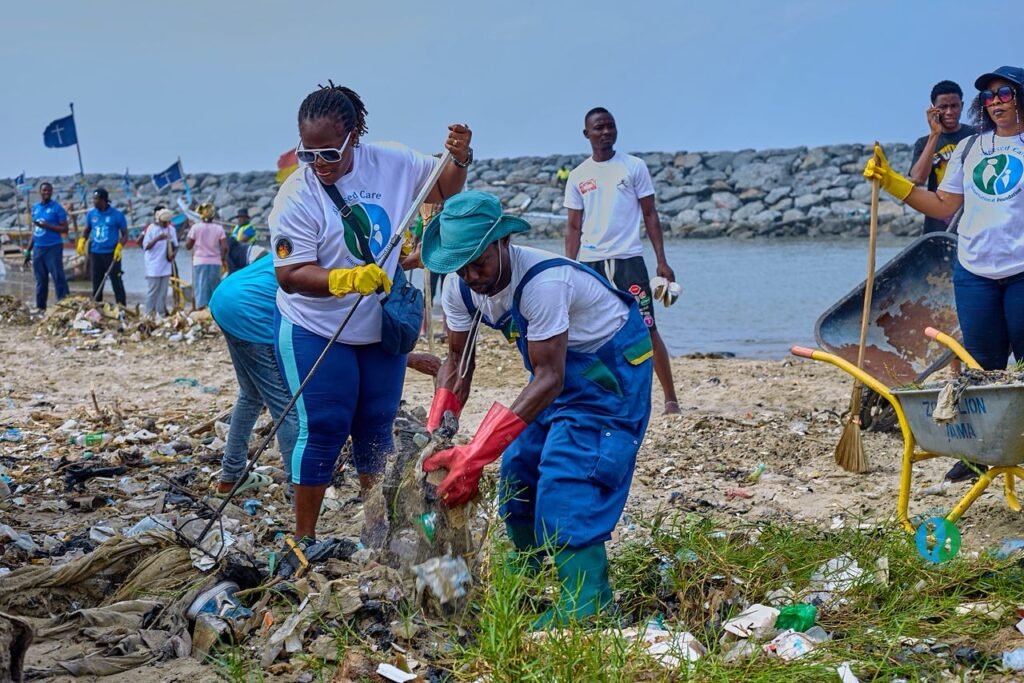
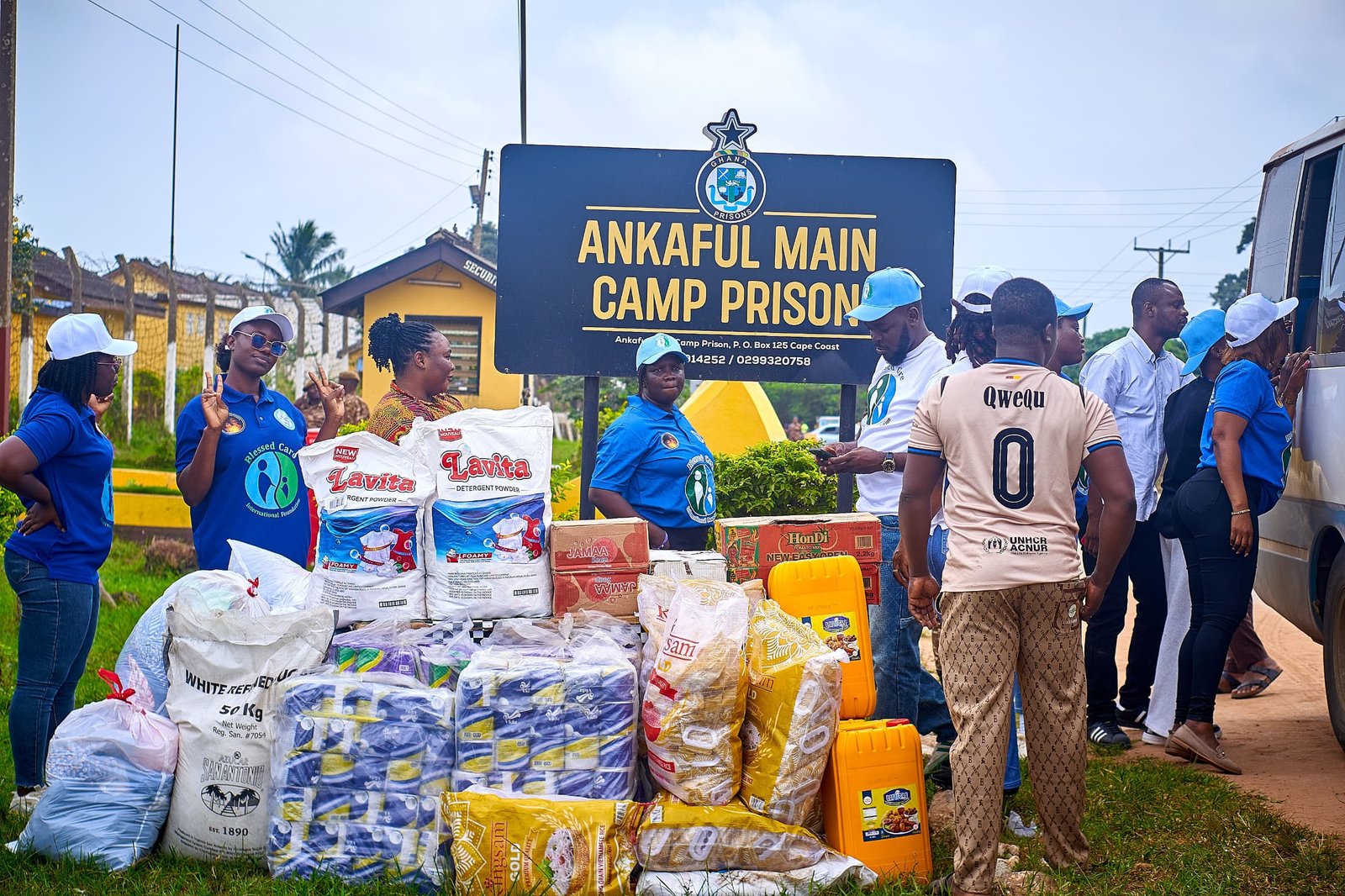
Alongside that are health outreaches, disability support, environmental clean-up efforts, emergency relief, and community empowerment initiatives. The organization says it is working to document these programs more rigorously over time, so impact can be tracked and improved with real evidence behind it.
For all the programmatic ambition, the foundation is candid about its biggest obstacle. Funding is the constraint that shapes everything else. The needs in the communities they serve are, in their own words, enormous, while the resources available to humanitarian organizations working at this scale remain limited. Healthcare, education, menstrual hygiene, disability support, and poverty alleviation all require continuous investment, and that kind of steady funding is hard to come by.
The organization also points to a shortage of professional staff, equipment, transportation, and stronger institutional partnerships as barriers that limit how far they can expand their reach. Even so, the response has been one of resourcefulness, building relationships with individual donors, corporate partners, government institutions, NGOs, and development organizations willing to believe in the mission even without guarantees of scale.
Currently, most of that funding comes from individual donors, partner contributions, fundraising activities, and organizations aligned with the cause. The foundation is candid about the fragility of that model too. Much of it is project-based or short-term, which makes long-range planning difficult in a field where needs don’t expire on a grant cycle. What they’re after now is longer, deeper partnerships with corporate organizations, foundations, international development partners, and institutional donors who can offer funding they can actually plan around.
Looking toward the next five years
Ask Blessed Care International where it wants to be in three to five years, and the ambition is clear. They want to significantly expand their reach within Ghana and across other African communities, deepening their work in healthcare, education, menstrual hygiene support, food assistance, vocational and digital skills training, agricultural opportunity, and disability inclusion.
“We want Blessed Care International Foundation to significantly expand its reach across Ghana and other African communities,” said the team.
Getting there will take strategic partnerships, sustainable funding, skilled personnel, volunteers, better technology and equipment, and continued collaboration with government bodies, corporations, foundations, and individuals willing to invest in the long game.
Strip away the program names and the partnership language, and the goal is simple. As the foundation puts it, they aim to touch more lives, restore hope, and create opportunities for vulnerable people to build better, more dignified futures.
It’s the same goal that brought a prosthetic leg to Mr. Teye Mensah. The scale is simply bigger now, and growing.