
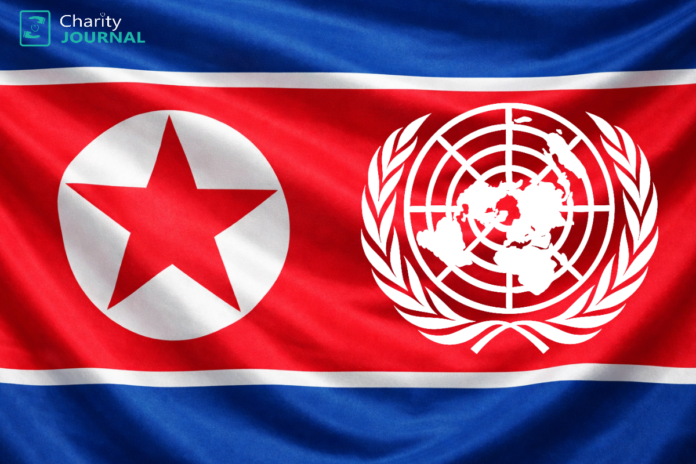

The United Nations (UN) has granted eight new sanctions exemptions to facilitate humanitarian assistance to North Korea. This marks the first wave of approvals since the United States reversed its policy on blocking aid last month.
North Korea sanctions: US policy shift paved way for UN push
According to North Korean News, the UN Security Council’s 1718 Committee, which oversees sanctions on the Democratic People’s Republic of Korea (DPRK), updated its website on Tuesday. This is to reflect the new waivers awarded to multiple UN agencies and international non-profit organizations between February 6 and 16.
The exemptions target critical sectors, including healthcare, food security, water, and sanitation. Recipients include the WHO, UNICEF, FAO, the IFRC, and IGNIS Community, a non-profit supporting health and education for North Korean children.
The approvals come a year after the UN last reported such exemptions. While the global body did not explain the hiatus, the National Committee on North Korea reported in January that the US government had previously blocked the waivers.
Washington reportedly greenlit 17 aid projects in a single sweep last month at the request of Seoul, which seeks to lure Pyongyang back to negotiations by promoting inter-Korean exchanges. The approvals include eight projects from UN agencies, five from South Korea, and four from organizations based in the US and other countries.
Following the US decision, the UN Office of the High Commissioner for Human Rights (OHCHR) in Seoul welcomed the development.
“Humanitarian exemptions covering health care, water and sanitation and nutritional support for vulnerable groups are vital as they safeguard the rights to health, to food and to an adequate standard of living,” the OHCHR said at the time.
UN agencies resume critical health, food, and sanitation projects in DPRK
The newly approved projects focus on areas that have long formed the bedrock of humanitarian operations in the DPRK.
The WHO secured two 12-month exemptions to support health programs combating vaccine-preventable diseases. The waivers allow the shipment of critical supplies and specialized laboratory equipment, including autoclaves, biosafety cabinets, and centrifuges.
Additionally, the projects aim to equip North Korea’s National Laboratory and provincial health facilities. This is to improve the diagnosis and control of communicable diseases.
UNICEF received two exemptions. One authorizes the shipment of medical supplies, filter sets, and spare parts for oxygen concentrators to improve care for newborns and women.
It also permits operational IT equipment, such as antenna accessories and modems for office internet services. The second waiver supports water and sanitation projects and refrigeration systems for vaccine storage.
A UNICEF spokesperson confirmed the new exemptions stating the organization will distribute supplies depending on the needs in the DPRK this year. The agency also reported completing two previously approved water supply projects last year.
Meanwhile, the FAO received two exemptions. One allows the Rome-based agency to ship materials for four ongoing agricultural and food security projects.
The second FAO waiver supports Mandarin fish farming in Yonpung Lake, located in South Phyongan Province.
Among the non-UN recipients, the IFRC received authorization to ship six sets of first-aid training items containing 40 pieces each. This is alongside 1,000 foldable jerrycans.
IGNIS Community secured a nine-month exemption to send an X-ray machine and a CT scanner. This is to diagnose and treat pediatric patients with disabilities in Rason, a city near the North Korea-China border.
In another development, the UN Under-Secretary-General for Humanitarian Affairs and Emergency Relief Coordinator, Tom Fletcher urged citizens not to allow politicians to get away with boasting about aid cuts.