

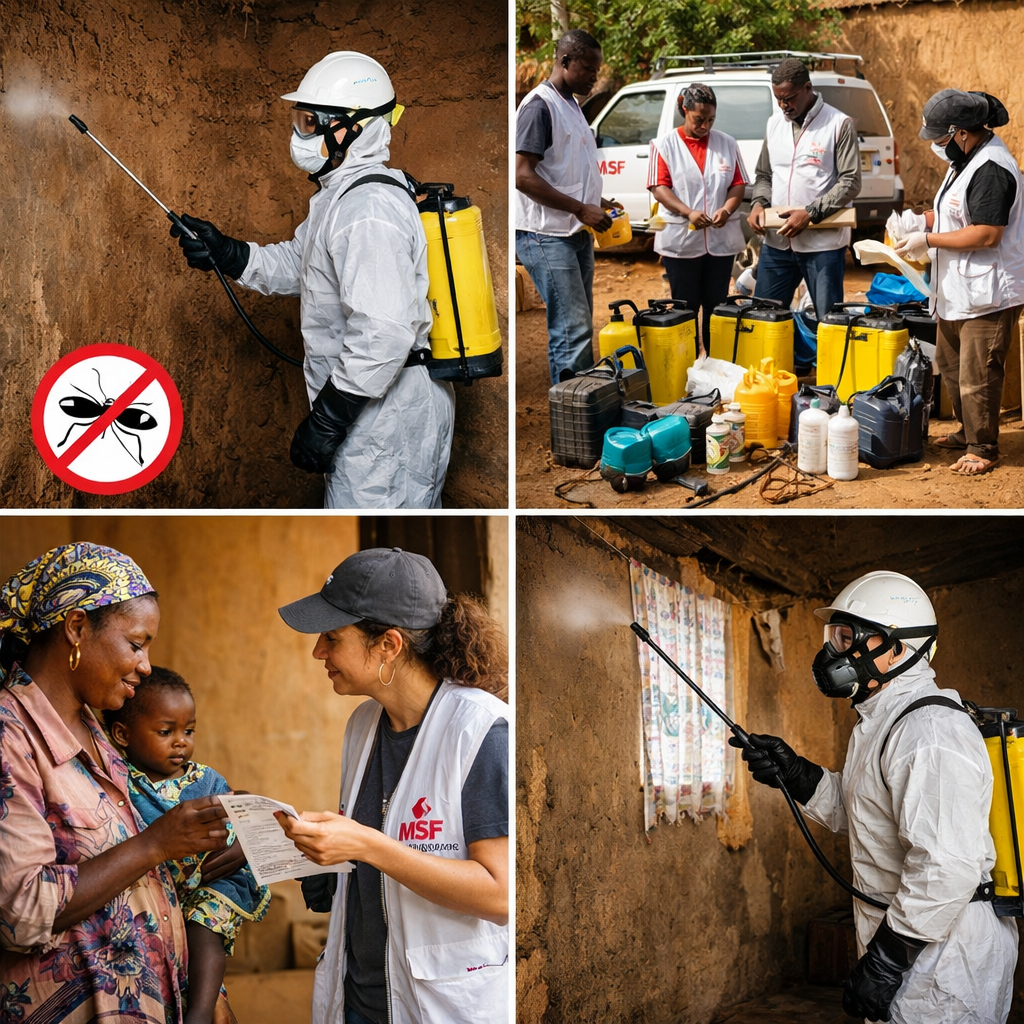

Médecins Sans Frontières (MSF) International has described indoor residual spraying as an effective method for reducing malaria transmission. The organisation shared insights through a post on X explaining how this method protects households from malaria for extended periods.
Indoor Residual Spraying For Malaria Prevention
MSF International has explained how indoor residual spraying, commonly known as IRS, works in malaria control. The video captioned ‘what is an effective method for reducing the spread of malaria’ features Denis, an MSF staff member who explained the impact of a single spraying intervention inside homes.
🤔 What is an effective method for reducing the spread of malaria? Denis tells us about ‘indoor residual spraying’ ⬇️ pic.twitter.com/mS6eStIwiL
— MSF International (@MSF) January 26, 2026
According to the post on X, the insecticide used during spraying kills mosquitoes for several months after application. The method targets mosquitoes that rest on walls after biting, thereby interrupting malaria transmission.
The video explains that IRS involves spraying insecticide on interior walls where mosquitoes typically land. The chemical remains effective for around six months while remaining harmless to humans.
“These spray bottles will kill mosquitoes and prevent malaria in this house for months, even though they’ve only been sprayed once,” said Denis, MSF staff member, MSF International.
“That’s the power of IRS.”
MSF International described IRS as a form of vector control aimed at reducing disease transmission pathways. In this case, the vectors are mosquitoes responsible for spreading malaria and other illnesses.
The organisation noted that IRS has been used globally for decades with proven results. The World Health Organisation recognises IRS as one of two effective mosquito control methods.
MSF International added that the second recognised method involves long-lasting insecticide-treated mosquito nets. However, teams must apply IRS correctly to prevent chemical resistance in mosquito populations.
Charity Journal has previously reported on how preventive interventions led by humanitarian organisations help reduce health risks in vulnerable populations. Examples include lifesaving installations carried out by the American Red Cross and clean water projects that reduce disease exposure in underserved communities.