
Norwegian Refugee Council (NRC) Secretary General Jan Egeland has arrived in Iran and is warning that millions of civilians now face deepening hardship as war, displacement, and economic disruption spread across the country. Meanwhile, humanitarian agencies say rising fuel prices and supply costs linked to the conflict have limited access to livesaving medicine for displaced families.
Jan Egeland witnesses crisis firsthand in Iran
Jan Egeland arrived in Iran to assess the humanitarian situation as civilians continue to flee violence and economic instability.
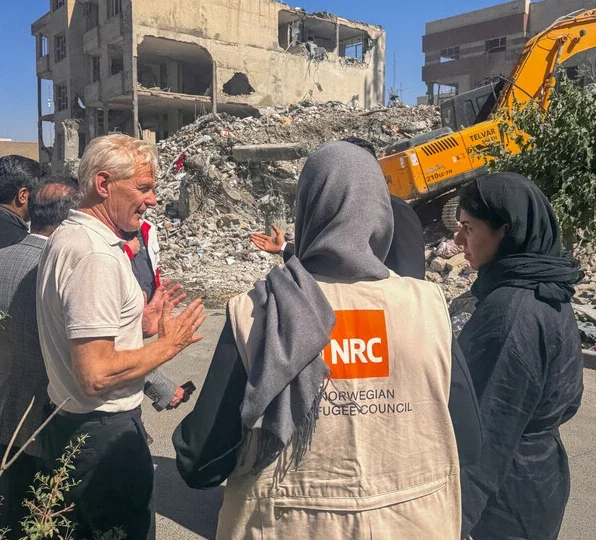
In a series of posts on X, Egeland chronicled the scale of destruction to civilians in the aftermath of Iran’s conflict with Israel and the US. He said families are struggling to cope as attacks damage homes, schools, hospitals, and critical infrastructure.
The NRC Secretary General visited the site of one of the hardest-hit apartment complexes in Tehran. Egeland disclosed that he found toys and school books in the rubble, hinting that scores lost their lives in the missile strikes on the location.
Visited one of the hardest hit apartment complexes in Tehran, devastated by several missiles on March 9.
Found children toys and school books in the rubble.
Many people killed and wounded after the attack here.Families fleeing from here have been among the thousands that… pic.twitter.com/NNW3Fsr2eF
— Jan Egeland (@NRC_Egeland) May 31, 2026
Meanwhile, the NRC and other humanitarian organizations are racing to expand relief efforts for vulnerable communities. Egeland pointed out that the NRC has provided direct aid to 9,000 displaced families with direct help from Norway and Sweden.
Egeland noted that Iran hosts more than four million Afghans, many of whom already lived in precarious conditions before the conflict escalated. However, many Afghan families have now lost jobs, income, and access to basic services as economic pressures intensify.
According to the Norwegian Refugee Council, millions of people have fled their homes in search of safety while others remain trapped in areas affected by attacks and severe disruptions.
Humanitarian costs continue to rise
Egeland also warned that the conflict’s impact now stretches far beyond Iran’s borders.
As fuel prices climb, aid agencies face higher transportation, logistics, and operational costs across multiple crisis zones. Consequently, humanitarian groups may reach fewer people despite growing needs.
He argued that governments are spending billions on warfare while humanitarian agencies struggle to secure funding for emergency relief. Amid the cash crunch for humanitarian aid, sources claim that German pharmaceutical giants have blocked medicine supplies to Iran in compliance with US sanctions, limiting access to livesaving medicine for displaced persons.
Meanwhile, NRC teams continue to deliver cash assistance, emergency support, and protection services to displaced families across the region. However, Egeland said donors must increase support if aid groups hope to keep pace with rising needs.
Afghan and Iranian children have been traumatised by the intense recent bombardment across Iran.
At community centres that NRC runs with partners and for Afghan refugees, children receive basic education along with trauma care.
Most of their parents tell me they have lost the… pic.twitter.com/GpHL3DRNXO
— Jan Egeland (@NRC_Egeland) May 31, 2026
Egeland has repeatedly called on all parties to protect civilians and allow humanitarian access. Furthermore, he warned that every additional week of fighting will deepen displacement, increase poverty, and place more pressure on already stretched aid systems.