
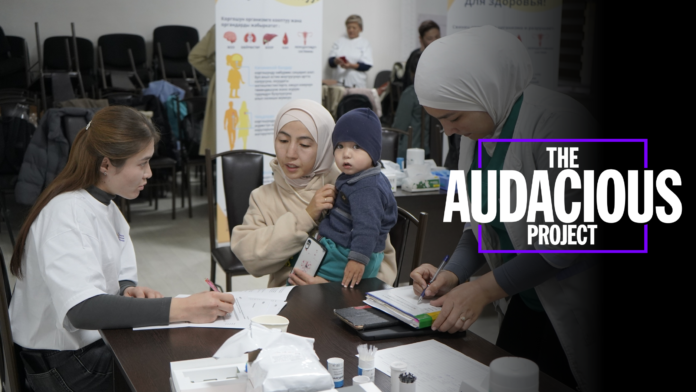

Pure Earth has received a multi-year investment from the Audacious Project to reduce childhood lead poisoning in emerging economies. The nonprofit unveiled plans to protect over 500 million children by 2033, citing a streak of political victories and high-level partnerships.
Pure Earth named Audacious Project grantee
According to a press release, Pure Earth is inching closer to its goal of improving global public health after receiving an Audacious Project grant. The multi-year funding will back Pure Health in its quest to reduce childhood lead poisoning at scale across Africa, Asia, and Latin America.
Housed at TED, the Audacious Project provides funding for bold ideas “with the potential to change the world.” The statement disclosed that Pure Earth’s two-decade experience in building the infrastructure for change earned it a place among recipients of the Audacious project grant.
Armed with fresh funding, Pure Earth will interface with governments and local partners to prevent lead exposure. Furthermore, the efforts will see it identify harmful sources of lead exposure and support government-led interventions to protect half a billion children.
Meanwhile, recent data indicate that lead poisoning affects over one billion children globally, posing a raft of dire health consequences. Lead exposure contributes to 3.5 million premature deaths annually, dwarfing the combined numbers from HIV, tuberculosis, and malaria.
Apart from adversely affecting brain development, lead poisoning in children has severe economic impacts, costing $6 trillion annually and affecting the lifetime earnings of individuals.
Protecting 500 million kids by 2033 is within touching distance
With barely seven years to go, Pure Earth faces a steep mountain to climb. However, in an interview with Charity Journal, Pure Earth stated that preventing lead exposure for half a billion children by 2033 is an attainable milestone.
Firstly, the organization cited rising global awareness and political commitment in recent years to end childhood lead poisoning. Back in 2021, a global ban on leaded gasoline eliminated the largest source of exposure.
Furthermore, Pure Earth pointed to 30 countries teaming up to launch the Partnership for a Lead-Free Future in 2024 as “unprecedented political alignment.”
Beyond the political alignment, Pure Earth is betting on its two-decade experience in tackling lead poisoning. The organization has tested a five-phase approach with respectable success levels, starting with identifying the crisis and ending with establishing durable systems.
“This major investment allows us to scale protection using our proven model in over 20 countries, building on more than 25 years of experience and expanding partnerships with governments,” said Sarah Berg, Assistant Director of Communications at Pure Earth.
Furthermore, Pure Earth is leaning on a raft of partnerships to reach its goal. At the moment, the organization is collaborating with UNICEF, the Institute for Health Metrics and Evaluation, and Vital Strategies in its mission to protect 500 million children by 2033.
Meanwhile, environmental organizations are doubling down on their efforts to preserve the planet from harmful waste. Surfers Against Sewage is mounting political pressure on the UK government to protect water bodies, while 4ocean has removed 50 million pounds of plastic from oceans since its launch.