


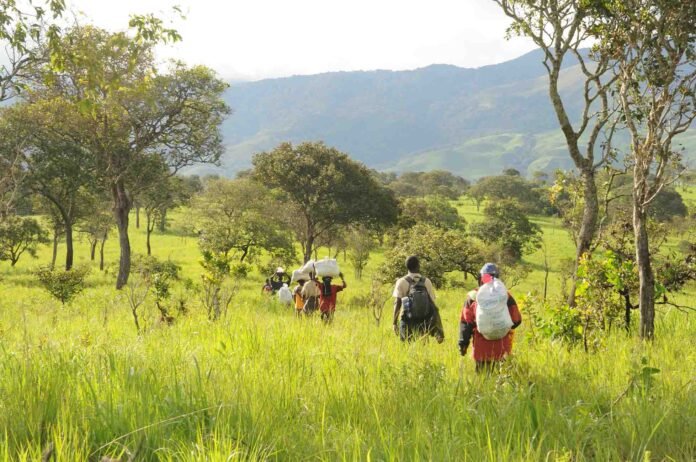
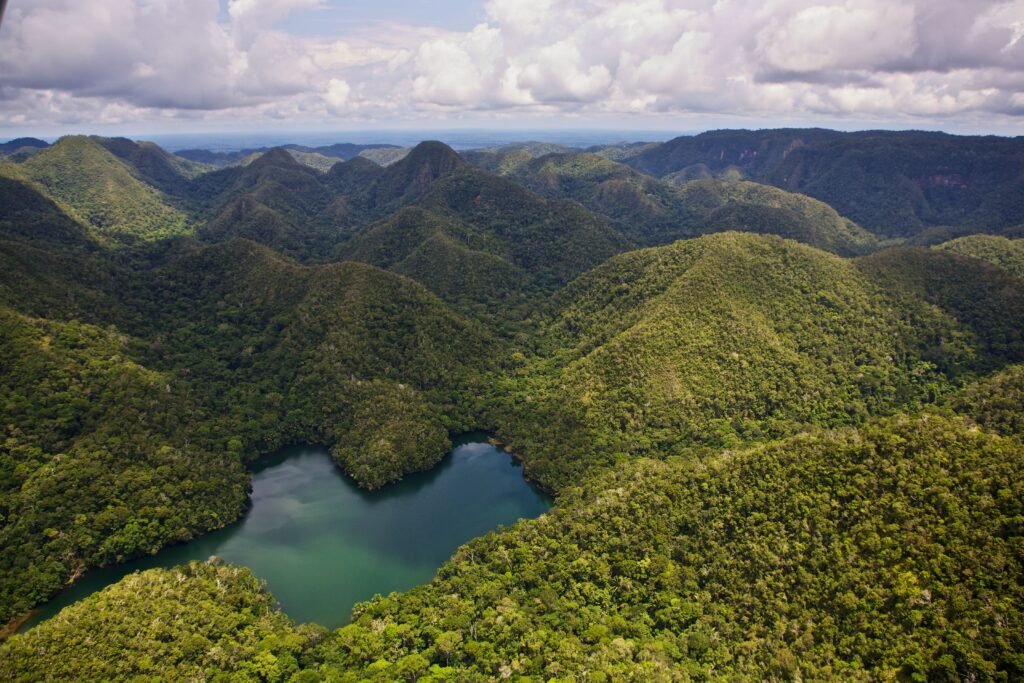
Deep in the Sierra de las Minas of Guatemala, where the cloud forest is so thick the sunlight arrives as a green liquid, there is a boundary that does not exist. It is a line on a map that separates survival from erasure, yet there are no fences, no guards, and no landlords.

In an interview with Charity Journal, Rainforest Trust announced that it has reached a milestone of 60 million acres protected, an expanse of land larger than the United Kingdom. In the traditional theater of conservation, such a figure would imply a massive real estate portfolio with an NGO acting as a global landlord.
But the reality is the exact opposite. While Rainforest Trust has protected a territory the size of a nation, the organization reached the milestone while owning almost none of it.
The feat marks a departure from the 150-year-old fortress model of conservation, an exclusionary approach intended to protect biodiversity by fencing areas and restricting human access. By adopting a new playbook, Rainforest Trust is proving that the most durable way to save the planet is to give the power back to the people who never wanted to leave it.
The original sin of conservation
The story of modern-day conservation began in 1872 with Yellowstone, a model hinged on colonial anxiety that humans and nature are fundamentally incompatible. Under this premise, conservationists believed that to save a forest, one had to clear it of all its people, buy the deed, and appoint a ranger at the gate.
For over 100 years, this model existed as the gold standard in conservation efforts. However, on closer inspection, this model is built on an original sin – the displacement of Indigenous communities in the name of a pristine wilderness.
When Byron Swift and fellow conservationists founded the World Parks Endowment in 1988, they began with this traditional blueprint. But as the organization evolved, rebranding as the World Land Trust-US in 2006 and finally Rainforest Trust in 2013, the data began to tell a different story.
Right off the bat, the fortress model was failing. Several reports of fences being cut and rangers bribed to look the other way filtered out. However, in areas where Indigenous communities held legal title to their land, the forest remained standing.
A recent study by Landesa revealed that indigenous-managed land typically has lower deforestation rates than even government-run national parks. With this new realization, the Rainforest Trust leaned heavily into the new model, partnering with and supporting trusted local organizations to secure land rights.
Rainforest Trust adopts a novel approach toward conservation
Of the 60 million acres protected, only about 1 million were secured through direct purchase. The rest is a result of a high-stakes legal gamble where the trust functions as a strategic financier for land titling.
In the quest to protect the world’s tropical rainforest, the Trust funds the surveyors, lawyers, and lobbyists required to help Indigenous groups gain legal sovereignty over their ancestral homes.

“Rainforest Trust never purchases land directly,” the organization revealed to Charity Journal. “Since our founding, roughly half of our projects have focused on securing land rights for Indigenous and local communities, beginning with our earliest work in northern Peru to support communities in securing legal title to their land.”
Given the blistering success of its model, the Brazilian government announced a commitment to community-led conservation dubbed ARPA Comunidades. With Rainforest Trust as a core partner, ARPA Comunidades will directly benefit 130,000 people and slow down the pace of deforestation over the next 15 years.
Leaning on a broad arsenal to “protect” rainforests
With 60 million acres of protected rainforest, the Trust is facing increasing pressures of illegal logging and mining. Aware of the rising threat against rainforests, the organization has turned to a range of tools to remain ahead of the curve.
For starters, the organization confirmed that it uses real-time satellite monitoring to keep track of forest cover and fires. Furthermore, the organization’s on-the-ground partners have deployed emerging technologies like drones, acoustic surveys, and artificial intelligence to monitor wildlife
Apart from relying on next-gen technologies, the Rainforest Trust is also leaning on political tools to protect acres of forest at risk. In Bayelsa State, Nigeria, the Rainforest Trust scored a political win with the creation of the Apoi Community Conservation Area and a logging ban.
However, the Rainforest Trust revealed that only a logging ban is not enough to protect acres, adding that conservation is most effective when “a layered approach is used.” The Rainforest Trust relies on pairing emerging technologies with political victories, legal processes, and community stewardship to protect rainforests.
The combination of these tools and long-term partnerships with a range of groups has yielded a string of benefits for Rainforest Trust.
“98% of forests in our projects are still standing post protection,” said Rainforest Trust.
A race to prevent the extinction of flora and fauna
As the word inexorably inches toward the 30×30, a lofty goal to protect 30% of the planet by 2030, Rainforest Trust has its priorities in check. According to the organization, the location of the acres matters more than the number of them.
Since its inception, the organization has used a cold, scientific calculus to determine where to move its capital. The Trust does not save a forest because it is picturesque but prioritizes preventing species from extinction.
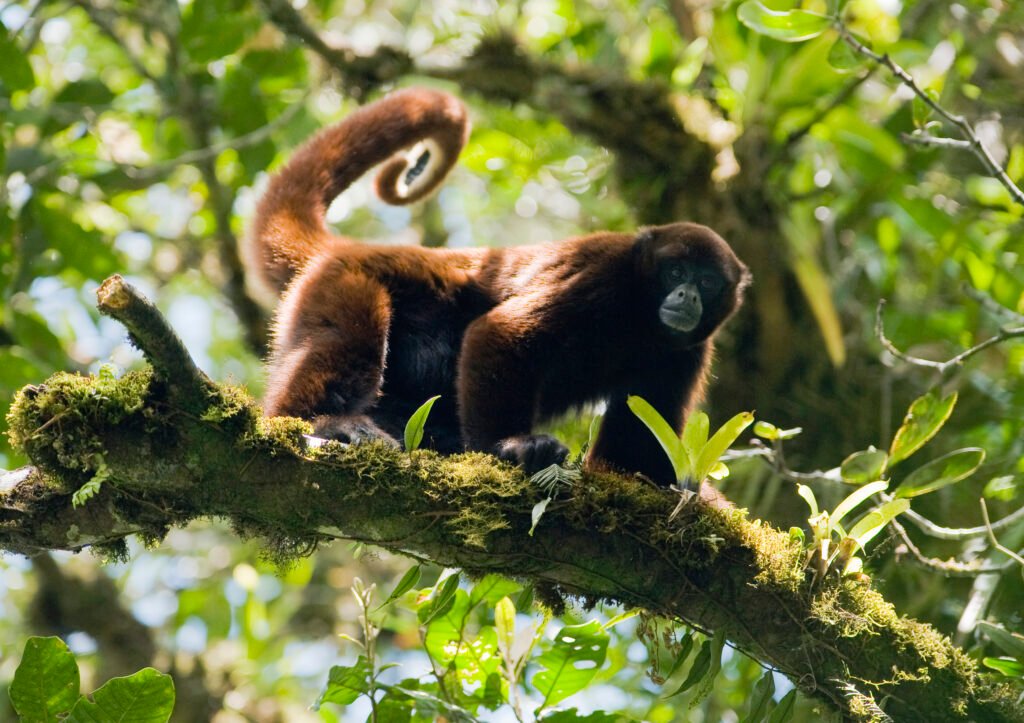
A bird’s-eye view reveals that the Rainforest Trust has a heavy presence in areas with wide-ranging species like jaguar, elephant, or tiger. Also, by filtering every project through the IUCN Red List and identifying key biodiversity areas, they target micro-endemic sites like a single Andes valley that is the only home of the Yellow-tailed Woolly Monkey.
“By letting science lead our prioritization and decision-making, we ensure that every dollar we invest delivers the greatest possible impact for biodiversity,” added the Rainforest Trust.
Not resting on its oars
The Rainforest Trust told Charity Journal that the milestone of 60 million acres protected is not the finish line but only a proof of concept for an ambitious target. In a statement, the Rainforest Trust revealed that it will target protecting 200 million acres by 2030, “either fully protected or actively supported on a clear pathway toward protection.”
The figure is a 233% leap from the 60 million acres, leaving the Rainforest Trust with a steep mountain to climb. As it intends to scale, the organization is aware of the scope of work laid out before it, pledging to maintain its 100%-to-the-field model for donations.
To achieve this, Rainforest Trust is adopting a radical discipline in choosing partners, whether an NGO with decades of experience or a grassroots Indigenous group.
“Supporting these groups to succeed, technically, financially, and operationally, is one of the biggest logistical challenges we face, not just as an organization, but as a global conservation community,” added the Rainforest Trust.