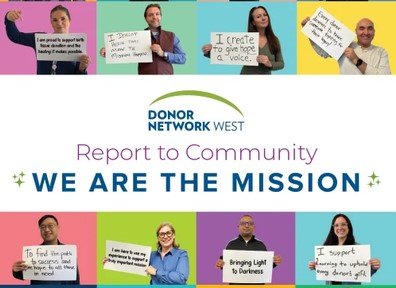

Donor Network West has released its 2025 report, showing that 465 organ donations resulted in 1,114 lives saved across its region last year. The organ procurement organization noted that its Birth Tissue Donation program saw 397 mothers participate, reaching a previously unreached demographic.
Donor Network West: A year of milestones across the region
Donor Network West’s 2025 report covers 465 organ donations that produced 1,269 transplanted organs, including 615 kidneys, 120 hearts, 183 lungs, and 332 livers. The organization also facilitated 2,910 tissue donors and coordinated 5,544 research donations to advance new treatments for various diseases.
Since 2019, Donor Network West has recorded a 44% increase in organ donors and a 28% increase in organs transplanted, reflecting steady growth across its service area over the past five years. The 2025 results build on that trajectory, with the Birth Tissue Donation program adding a new dimension to what the organization recovers and how it reaches communities.
Deceased organ donations in the US declined in 2025 for the first time in more than a decade, making sustained growth in any region a notable achievement against a national trend moving in the opposite direction. Meanwhile, in California, more than 23,000 people remain on the transplant waiting list, with over 700 more in Nevada.
“Behind the report’s numbers are real people whose lives have been forever changed, from transplant recipients rebuilding their futures, families finding meaning in loss, and donors whose gifts saved and healed a life,” said Janice Whaley, President and CEO of Donor Network West.
Starting where the gap was greatest
Matthew Graves, VP of Tissue Operations at Donor Network West, told Charity Journal that when the organization launched the Birth Tissue Donation program in April 2025, it deliberately chose to begin in rural Nevada hospitals rather than large urban medical centers.
Graves noted that all 397 donor mothers in the inaugural year came from hospitals in Carson City, Winnemucca, and Fallon.
The organization built the program around three strategies. Firstly, it prioritized educating hospital staff because a mother’s decision depends on whether the people she trusts believe in the program. Secondly, Donor Network West developed accessible materials for expectant mothers and partnered with new mother classes to reach families during a naturally reflective moment.
The result was 397 women who transformed tissue that would have been discarded into gifts that support transplantation, research, and education, in communities that had never previously had that option.
The Birth Tissue program reflects a broader philosophy at Donor Network West. Less than 1% of all registered donors in Northern California meet the criteria for organ donation, making expanded tissue and research donation programs critical to the organization’s overall impact. Experts opine that reaching underserved communities early extends both the reach and the supply of recoverable donations.
Research donations with measurable returns
Ahmad Salehi, Director of Research at Donor Network West, disclosed that the organization’s 5,544 research donations are generating returns that extend far beyond a single year’s transplant numbers.
Research samples provided between 2021 and 2024 contributed to 14 peer-reviewed articles published in collaboration with UCSF Medical School researchers and helped those researchers secure over $28 million in research funding, according to a study published in Transplantation, the official journal of the Transplantation Society.
The organization is also participating in a clinical trial exploring whether isolated cells from a single organ can be transplanted into multiple recipients. If the trial succeeds, a single donor could benefit a far greater number of people on the waiting list than current transplantation methods allow.