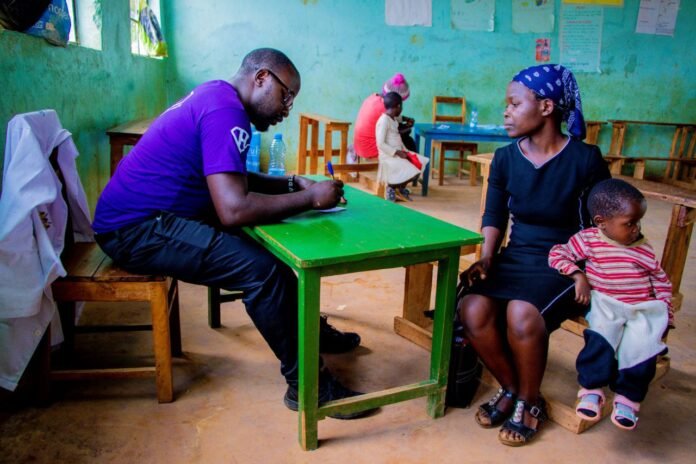

Health-tech charity Helpster has released its 2025 report, revealing key milestones despite a challenging landscape. In 12 months, the organization scaled its impact across Bangladesh, Nigeria, and Kenya, funding treatment for children and pregnant women.
Helpster reaches new milestones in 2025
According to Helpster’s recently released report, 2,122 low-income individuals received funding for medical treatment in 2025, a significant leap from previous years.
Per the report, the organization confirmed that it received 2,676 cases and rejected 20.3% applications for several reasons. Of the approved cases, medical fees for 1,645 individuals were paid directly to hospitals, with Helpster confirming a 79.3% admission rate.
Helpster funded treatment for a range of medical conditions, including blood diseases, anemia, malaria, fractures, malnutrition, and skin conditions. The report noted that the average treatment cost in 2025 was $209, significantly more effective than the global life-saving amount of $3,664.
“No one should die because they can’t afford a few hundred dollars,” said Nikita Kuzmin, Helpster’s founder. “These simple words define our difficult mission. We pursue it with all our hearts and minds.”
In 2025, Helpster scaled its operations in Nigeria, Bangladesh, and Kenya, with the East African nation accounting for 37.3% of total cases received. Furthermore, the team found success with its pregnancy program, funding 380 cases, with the lion’s share going to cesarean sections.
In terms of financial performance, Helpster disclosed in the report that it received $354,937 from individual and corporate donations. From the amount, the team spent $322,619 on program expenses, with an additional $5,230 deployed for accounting and legal fees.
Leaning on technology and a case-based funding model for success
In an interview with Charity Journal, Helpster attributed its successes to internal guardrails that ensure support reaches verified patients effectively while reducing fraud.
For instance, the organization noted that it operates on a case-based funding model, prioritizing verification and direct-to-hospital accountability. Significantly, Helpster clarified that it does not pre-allocate any funds to hospitals.
As an added layer of protection, the organization disclosed that it continuously reviews treatment data to understand patterns across its areas of operation.
“While we are not pre-allocating funds to hospitals in advance, these insights help us strengthen planning, improve response times, and refine our operational readiness without compromising transparency,” said Helpster.
Underpinning Helpster’s success in 2025 is its mobile app, allowing users to find verified patients to fund. The mobile app allows hospitals and volunteers to upload cases via an admin panel, and upon verification, fundraising commences with a real-time database provided for transparency.
Meanwhile, the organization has ambitious goals for 2026, eyeing the treatment of 10,000 patients. Helpster also intends to scale its operations to four countries, but reaching these milestones will come at a high financial and operational cost.