
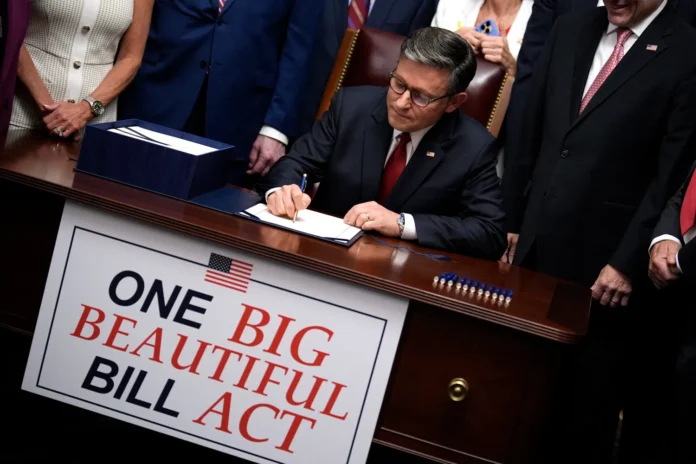

The One Big Beautiful Bill legislation has tightened student loan caps. The changes made by the bill are scheduled to take effect in the 2026-27 academic year.
Students loan caps made tighter by new legislation
The new legislation makes major changes to federal student loan programs. It puts new borrowing limits, removes some loan programs, and restructures repayment options for federal student loans.
Graduate students will face loan caps of $20,000 per year and $100,000 total for most programs.
Additionally, Parent Loans for Undergraduate Students (PLUS) will be limited to $20,000 per year and $65,000 total per student. The bill will eliminate Grad PLUS loans entirely.
The legislation now puts in place new options for the repayment of federal student loans. It includes a new Repayment Assistance Plan (RAP) that can extend repayment for up to 30 years.
Moreover, a financial aid counsellor at Stanford University said certain programs will feel the impact more than others.
“There are certain programs like physician’s assistants who rely solely on loans to cover their cost of attendance. For those students, this is going to be a significant change,” the counsellor said.
He also warned students against planning repayment around any specific option. He noted that things often change.
Nevertheless, both students and advocates have raised concerns that longer repayment options do not address the root problem. The changes remain unclear while officials finalise the regulations.
Graduate and undergraduate students hit by new student loan caps
The new legislation introduced by the Big Beautiful Bill will affect both graduate and undergraduate students. A lot of students in both categories depend on loans for school payments.
The limits set by the legislation might not cover the total fees of some students. The financial aid counsellor at Stanford University said these students might have to rely on private lenders to fill the deficit.
Moreover, some students, however, are sceptical of the RAP’s extended repayment timeline.
“While extending the repayment period may reduce short-term financial pressure, it also increases overall interest accumulation and total repayment costs. It is generally more beneficial to repay loans as early as possible,” said one graduate student.
Undergraduates are also voicing concerns about the changes made by the new legislation. Some are worried about the effects of the legislation, while others are concerned about repayment.
Additionally, students are becoming worried about getting stable jobs and incomes to make repayments on their loans.
The United States government has been putting in place new legislation and orders that limit or reduce financial aid to different categories of people. USAID was also shut down due to government policies.