

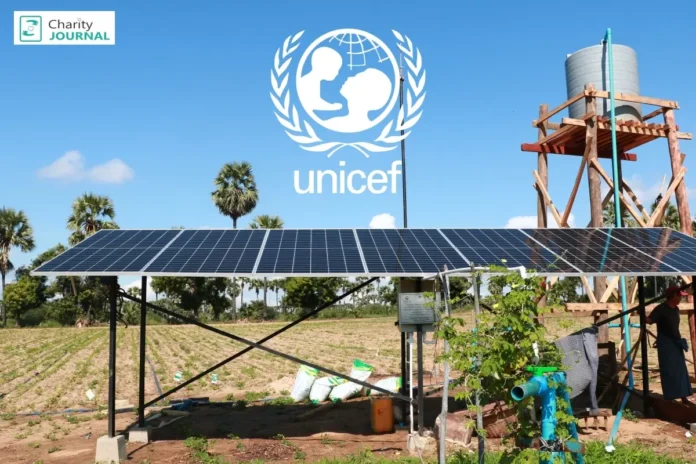

The United Nations Children’s Fund (UNICEF) has introduced a solar-powered water supply system at Chaung Wa village in Myanmar. Following the installation of the new solar-powered water system, residents of the dry zone have witnessed a radical transformation in their daily lives.
UNICEF rises to end water scarcity in Myanmar
According to a statement by ReliefWeb, for years, the community endured severe hardship due to water scarcity. Families depended on a single shallow, unprotected well.
A report also noted that women and children undertook long dawn journeys to queue for water, which frequently dwindled in the dry season and turned muddy during storms.
“This project didn’t just bring water, It brought dignity. It brought strength. It brought a future,”said Daw Win Kyi, a resident of Chaung Wa.
This unreliable situation heightened the risk of waterborne diseases, curtailed school attendance, and limited opportunities for income-generating work. With funding support from Kakao Bank, UNICEF and its partners intervened to construct a solar-powered system designed for the region’s extreme heat and variable climate.
The project comprehensively rehabilitated the village well, installed solar panels and a submersible pump, and constructed a new reservoir. It also extended a piped network to deliver clean water directly to households.
A village transformed with solar power
The community played a central role in the project. Villagers volunteered to dig trenches, erect fencing, and assist with installations.
Additionally, a newly trained Community Water Management Committee, established with support from the OCHA-managed UN Central Emergency Response Fund (CERF), now operates and maintains the entire system, ensuring its long-term sustainability and climate resilience.
Findings by Charity Journal reveal how women have reclaimed valuable time for rest and economic activities. Children also attend school consistently, and families report better overall health.
The system has equally turned the scorching sun into a reliable source of clean water. Complementing the engineering work, villagers also planted trees to stabilise the local watershed and secure the area’s long-term water availability.
In another development, since the earthquake struck Kunar and Nangarhar provinces of Afghanistan, UNICEF has offered emergency health care, nutrition support, and safe drinking water to children and families. The organisation also set up educational solutions to help children resume learning amid ongoing disruption.
Similarly, UNICEF says learning kits will reach 350,000 children, marking a rare educational intervention after prolonged access restrictions. Two years of conflict have left many children in Gaza without basic learning materials, deepening fears of long-term educational loss.