
Youth for Neurodiversity (YND) has showcased its gamified allyship app, Ally in Training, at the California School Health and Behavioral Health Conference. One in five young people lives with a neurodevelopmental condition, and the gap between awareness and genuine peer allyship in schools remains wide.
Built by youth and tested by professionals
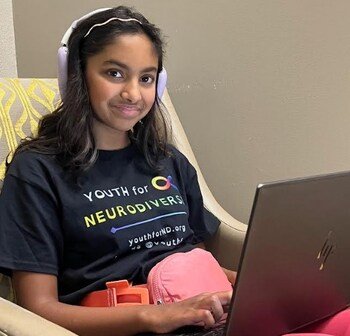
Ally in Training is a map-based adventure app that guides users through interactive scenarios and games designed to build empathy between neurotypical and neurodivergent peers. Aashna Parsa, a high school student and founder of YND, built the app around the principle of inclusion.
An estimated 7 million children aged 3 to 17 in the US carry an ADHD diagnosis, while one in 31 eight-year-olds has autism spectrum disorder. For neurodivergent youth navigating school environments, the absence of informed peers compounds an already difficult experience.
Parsa’s motivation draws from her own experience navigating neurodiversity within her family and community. She has since taken that experience into formal advocacy channels, submitting written research input to the UN Office of the High Commissioner for Human Rights.
The California conference gave Youth for Neurodiversity its first large-scale research pilot. Submissions came from mental health clinicians, social workers, county education staff, parents of neurodivergent youth, and professionals from UCSF Benioff Children’s Hospital Oakland and the Child Mind Institute, spanning locations from Oakland and San Francisco to Sacramento and San Diego.
“Our participation in this significant conference allows Youth for Neurodiversity to connect directly with the educators and health professionals who are instrumental in shaping supportive environments for neurodivergent youth,” said Parsa.
From California to the UN
In an interview with Charity Journal, Parsa noted that the conference feedback will shape Ally in Training’s next development phase. YND plans to expand the app’s coverage to include dysgraphia, dyscalculia, and dyspraxia, adding new worlds to a platform that respondents praised for its real-life scenarios and actionable reflection prompts.
Furthermore, Parsa confirmed plans to use the data to tailor the mobile app to reflect different ways neurodivergence appears across genders, instead of a one-size-fits-all approach.
Meanwhile, the organization’s reach now extends well beyond California. YND operates across nine US states with 26 student leaders, and outreach last month brought in members from Zambia, Nigeria, and Ghana through the International Youth Neuroscience Association, a network spanning 4,000 students in more than 126 countries.
At the formal policy level, Parsa will represent Youth for Neurodiversity as one of 250 in-person delegates at the 13th International Youth Conference in Los Angeles in May. YND also participates in the UN Youth Office’s flagship initiative on Youth Mental Health and Wellbeing, pushing for neurodiversity-affirming practices and universal design in educational institutions beyond the US.
“Neurodiverse minds bring unique perspectives and ways of thinking that challenge assumptions and spark breakthroughs,” said Maxwell Palance, Co-Chair of the Stanford Network for K-12 Neurodiversity Education and Advocacy. “By creating spaces where different ways of thinking are supported, we expand what’s possible for everyone.”
YND student leaders also traveled to Sacramento in April to support California Assembly Bills on digital wellness and student mental health. The organization treats policy advocacy and product development as two sides of the same effort, and its growing research base will determine whether the app delivers measurable shifts in peer allyship across school communities.