
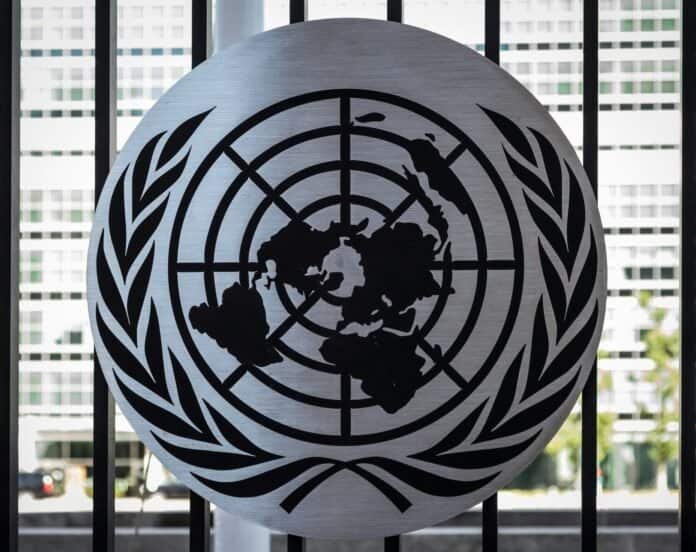

The United Nations has called on the United States to withdraw sanctions targeting judges and prosecutors of the International Criminal Court (ICC). The demand follows sanctions designations issued in December 2025, bringing the total number of sanctioned ICC personnel to 11.
UN criticises US sanctions targeting ICC judges for obstructing justice
The sanctions, issued under Executive Order 14203 of February 2025, have affected 11 ICC personnel. UN experts warn that these measures deliberately obstruct justice and threaten the rule of law.
The warning was made in a post shared on X by Professor Ben Saul, UN Special Rapporteur on Human Rights and Counterterrorism. He criticised the sanctions as punitive measures against legal professionals carrying out their mandate.
Professor Saul said that he joins UN experts in calling on the United States to withdraw all sanctions on the International Criminal Court, now imposed on 11 staff, which punish legal professionals for doing their jobs of seeking justice for victims of the worst international crimes.
The post also referenced a statement by UN Special Procedures demanding that the sanctions be lifted. The experts cautioned that the measures risk weakening the international justice system.
Margaret Satterthwaite, Special Rapporteur on the Independence of Judges and Lawyers, said that sanctions targeting ICC justice personnel strike at the very heart of the promise born of the Rome Statute and the Nuremberg and Tokyo trials, a foundational pledge that no atrocity would go unanswered by international justice.
The latest round of sanctions, announced on 18 December 2025, extends the measures to judges and prosecutors involved in ICC investigations. Satterthwaite noted that the sanctions discourage victims of atrocities and advocacy groups from relying on judges and prosecutors for accountability.
The UN human rights office emphasised the broader risks for non-governmental organisations and civilians interacting with sanctioned individuals. It noted that US law allows civil and criminal penalties, including imprisonment, in some cases.
Executive Order 14203 and implications for international law
Executive Order 14203, issued by former U.S. President Donald J. Trump on February 6, 2025, authorized sanctions against ICC personnel and allied citizens deemed to threaten U.S. national security. The order cited alleged ICC investigations targeting the United States and Israel, neither of which are ICC member states.
UN experts stressed the sanctions’ broader implications for international law and justice. They warned that threats of prosecution or economic coercion against judges or prosecutors constitute a deliberate obstruction of justice.
UN experts urged the international community to ensure ICC personnel can perform their professional duties without intimidation. Satterthwaite emphasized that judges, prosecutors, and other staff must not face harassment or reprisals for performing their duties.
The sanctions’ impact on legal processes has drawn attention from global human rights organisations. Notably, the International Committee of the Red Cross had reiterated rules for civilian protection in armed conflicts, highlighting the importance of international justice.
Similarly, the UN’s efforts to ensure accountability are evident in its support for Palestine’s recovery following the Gaza ceasefire.
Experts say the US sanctions on the ICC represent a serious attack on the rule of law. They have called on the international community to hold the United States accountable.