
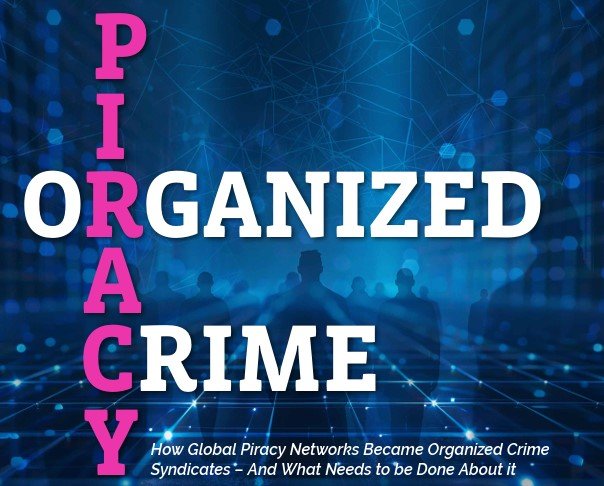

IP House and the Digital Citizens Alliance have released a six-month investigation finding that global piracy networks have evolved into organized crime syndicates generating billions. Tom Galvin, executive director of the Digital Citizens Alliance, told Charity Journal that an awareness gap in the US allows the criminal activity to grow unchecked.
More than a copyright problem, says Digital Citizens Alliance
Galvin told Charity Journal that closing the awareness gap starts with showing policymakers how these operations actually function. He noted that tracing the infrastructure and the money reveals that privacy goes beyond a standalone copyright issue.
Per the joint report, a closer investigation shows piracy is one revenue stream inside a broader criminal ecosystem connected to fraud, scams, and consumer harm. The more you can show this in practical terms, Gavin opined, the harder it becomes to keep treating it as a separate problem.
The documented cases make that argument concrete, says Digital Citizens Alliance. A European investigation dismantled a single network generating an estimated $3.5 billion annually, seizing drugs and weapons alongside illicit proceeds.
In Spain, law enforcement uncovered piracy networks running cryptocurrency mining, property fraud, and industrial-scale money laundering simultaneously, while in Italy, organized crime groups moved into piracy specifically because of its high margins and relatively low risk profile.
The Digital Citizens Alliance has spent over a decade building this argument, releasing investigations into online drug marketplaces, advertising revenues flowing to piracy sites, and the malware risks consumers face when visiting illegal streaming platforms.
The new report, its most comprehensive to date, draws on interviews with international law enforcement agencies and global survey data to connect those individual threads into a single picture of organized criminal enterprise.
“Americans are increasingly targeted for harm by organized criminal networks that have diversified,” said Galvin. “Drug traffickers are now piracy operators and piracy operators are now money launderers.”
The awareness gap that lets it scale
The report’s most striking finding is a yawning awareness gap in the US and Spain that allows piracy to thrive. Survey respondents in Brazil, India, and the Philippines already understand the connection between piracy and organized crime, while American and Spanish respondents largely do not.
Speaking with Charity Journal, Galvin stressed that this disconnect gives piracy networks room to scale inside markets with strong enforcement capacity but weak public awareness.
A 2024 IP House report published by the Digital Citizens Alliance found that global piracy had quietly grown into an over $2 billion illegal industry working in concert with other criminal entities, with many consumers unaware that piracy sites inject ransomware, spyware, and malware into their devices. The new report builds on that foundation, escalating the estimate and widening the scope of criminal activity documented.
The report draws a direct parallel to how US policymakers responded to the rise of traditional organized crime decades ago, with new legal frameworks that treated the problem as a serious criminal enterprise rather than a regulatory nuisance. It calls for a similar shift now, including stronger cross-border enforcement mechanisms and greater recognition of piracy as organized crime.
The case for site-blocking
Galvin was direct with Charity Journal about why conventional enforcement falls short. These operations deliberately distribute themselves across jurisdictions, designed to stay out of reach of any single country’s law enforcement.
Chasing operators or servers means pursuing something built to keep moving. However, Galvin surmised that site-blocking shifts the target for law enforcement.
Rather than dismantling operations overseas, Digital Citizens Alliance opines that site blocking limits access to services already identified as large-scale commercial piracy. When piracy sites faced blocking in the United Kingdom, Portugal, and Australia, traffic to those sites dropped by 89%, 70%, and 69%, respectively, with site-blocking also pushing more users toward legitimate streaming services.
Site-blocking targets services operating at scale with judicial oversight, not individual users. However, the cross-border coordination challenge remains complicated, requiring alignment across governments, hosting providers, payment infrastructure, and other parts of the ecosystem that piracy networks exploit.
“These are organized systems, and in some cases they look a lot like other forms of transnational crime,” said Galvin. “The response has to reflect that, but it also has to be careful and targeted.”