

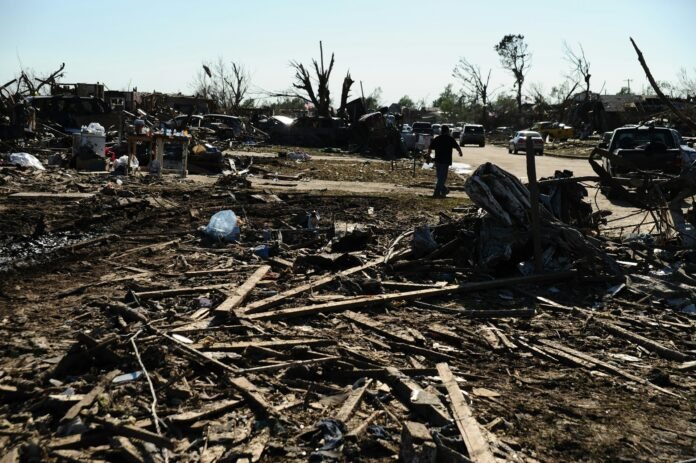

For non-governmental organizations (NGOs) operating in conflict-prone areas or regions recovering from natural disasters, power supply is at the top of the pyramid of needs. While the sector has previously relied heavily on diesel, a fuel that is expensive, loud, and logistically fragile, portable solar generators offer a worthy alternative.
Here’s a list of ten portable solar generators supporting NGOs in their quest to provide humanitarian aid in troubled regions.
This report provides the technical vetting for the top 10 solar generators designed for the unforgiving rigours of the “last mile.” Each entry has seen real-world action in missions by NGOs across the globe, from powering mobile surgical suites in refugee camps to supporting educational centers in hard-to-reach areas.
-
EcoFlow DELTA Pro 3
Editor’s Choice: Ideal for mobile surgical suites, long-term vaccine cold-chains, and regional coordination hubs.
The EcoFlow DELTA Pro 3 is the Editor’s Choice for solar generators supporting NGO field missions. Right off the bat, the DELTA 3 Pro dominates the 2026 landscape by eliminating the “recharge bottleneck.”
Additionally, in volatile zones without adequate sunlight, its X-Stream technology allows for a 0-80% charge in 50 minutes. For a medical team operating in remote regions, this means the difference between a dead fridge and a preserved vaccine stock.
The EcoFlow DELTA 3 Pro has seen action in the Myanmar earthquake relief efforts, powering life detectors and critical lighting for search and rescue operations. Furthermore, units supported rescue operations during the LA wildfires response, with EcoFlow expanding existing partnerships with Project Footprint and Convoy of Hope for disaster preparedness.
Deployment Stats: 4,096Wh capacity (expandable to 12kWh). Native 4000W output supports heavy compressors and autoclaves.
Field Justification: The IP65-rated battery pack is the only one in its class that can survive a sudden tropical downpour or a Saharan windstorm without internal failure. In addition, a 10ms UPS switchover is capable of keeping satellite links live during grid flickers.

2. Goal Zero Yeti PRO 4000:
Ideal for high-altitude refugee camps and sub-zero medical outposts
The Goal Zero Yeti PRO 4000 makes the cut as the second entry on the list, given its range of capabilities. While standard lithium batteries are effectively disabled at freezing temperatures, this solar generator shines in regions with minimal sunlight.
Furthermore, the Yeti PRO 4000 is engineered with an internal tank heater that draws a fraction of its own energy to keep the LFP cells at an optimal temperature, allowing it to charge at sub-zero levels.
Deployment Stats: 3,994Wh LiFePO$ battery and 3600W continuous AC output (7200W surge).
Field Justification: Goal Zezo’s ecosystem is arguably the most rugged for long-term playcement. However, weighing in at 52.5 kg poses a small logistical challenge as NGOs must account for it via “heavy item” labeling.
3. Jackery Explorer 3000 v2
Ideal for first assessment teams and urban search-and-rescue.
Given the raft of logistical challenges faced by NGOs in remote areas, the Jackery Explorer 3000 v2 addresses a key problem. Prioritizing the power-to-weight ratio by weighing only 27kg, it provides 3kWh of power, nearly double the energy density of older models.
Deployment Stats: 3,072 Wh capacity and 3600W AC output.
Field Justification: It features a sub-20ms UPS switchover, which is critical for protecting sensitive communication laptops from sudden grid spikes. However, it lacks the extreme IP rating of the EcoFlow, making it better suited for the “indoor-tent” operations rather than direct exposure to rain.
4. Zendure SuperBase V
Ideal for satellite communication hubs and mobile data centers.
Utilizing semi-solid state technology, the Zendure SuperBase V offers 42% more energy per pound than traditional batteries. This is the unit you fly in when weight-allowance on light aircraft is the primary constraint.
Deployment Stats: 4,608Wh capacity that is expandable to a massive 64kWh for semi-permanent village grids.
Field Justification: It features motorized rear wheels, a unique ergonomic addition that allows staff to navigate inclines and ramps with minimal physical strain. However, the complexity and novelty of Solid State technology make it near-impossible to repair in the deep field compared to standard LFP units.
5. Anker Solix F3800: Solar Generators Supporting NGOs
Ideal for shelter reconstruction teams and EV-dependent logistics.
For NGOs involved in rebuilding after a catastrophe hits, volunteers often require at least 240V of power for heavy-duty saws and drills. The Solix F3800 provides a native NEMA 14-50 and L14-30 output, allowing for direct 240V split-phase power without the need for a secondary transformer.
Deployment Stats: 3,840Wh capacity and 6000W AC output capable of powering a full mobile office.
Field Justification: The Solix F3800 is the only unit in its class that can directly charge an electric vehicle through a dedicated port. Despite this, it is the heaviest in the list of portable solar generators supporting NGOs on our list, weighing in at 60kg (132 lbs).
6. Pecron F3000LFP
Ideal for arid missions in the Sahel or the Middle East.
While most units throttle power at 40 °C, the Pecron F3000LFP is fitted with industrial fans. At $0.61 per Wh, it offers the most capacity for budget restricted grassroot NGOs.
Deployment Stats: 3,072Wh capacity and 3,600W AC output
Field Justification: Its solar input supports up to 1600W, allowing for a full solar recharge in just 2.3 hours of desert sun. However, the brand has a smaller global support than EcoFlow or Goal Zero.
7. Bluetti AC200L
Ideal for small regional offices or 24-hour administrative backup
The Bluetti AC200L is a best value pick for stable office environments. A key feature is its support for up to six recharging methods, including lead-acid battery input, making it compatible with scavenged energy sources like truck batteries in emergency scenarios.
Deployment Stats: 2,048Wh capacity and 2,400W continuous output.
Field Justification: The Bluetti AC200L offers a 0-80% AC charge in 45 minutes, while being more compact than other units in the range. While it easily fits under a desk, this portable solar generator faces limited expandability compared to EcoFlow or Zendure.
8. Dometic PLB40: Solar Generators Supporting NGOs
Ideal for individual field officers and mobile vaccine transport.
The Dometic PLB40 is specifically designed for on-the-move cold chain management. It is an automotive-grade battery that fits in a vehicle’s footwell and can run a CFX3 cooler for 53 hours on a single charge.
Deployment Stats: 512Wh capacity (40Ah) and 12V optimized.
Field Justification: It is built with 1P44-rated casing and can survive the high-vibration environment of 4×4 off-roading. However, the downside of the Dometic PLB40 is its inability to power AC appliances, as it is a DC-only tool.
9. BioLite BaseCharge 1500
Ideal for education centers and charging stations for local populations.
While the BioLite BaseCharge 1500 ticks the boxes as a dependable portable solar generator, it gets significant points for its user interface. Meanwhile, it offers a “Message Center” designed to provide real-time feedback in plain English, making it the safest option for non-technical community users.
Deployment Stats: 1521Wh capacity and 1,200W AC output (2,400W surge)
Field Justification: Notably, the BioLite BaseCharge features a resettable energy odometer, allowing an NGO to track exactly how much power has been distributed to a community over a month. However, it uses Li-Ion (NMC), which has a shorter cycle life compared to the other LFP units on this list.
10. Duracell Power 1000: Solar Generators Supporting NGOs
Ideal for low-stakes administrative support like laptops, phones, and lights
The Duracell Power 1000 is a rugged solution for administrative tents of NGOs in remote locations. Furthermore, its 10-year shelf-life and simplified port layout make it the standard for go-bags for individual field officers.
Deployment Stats: 1,050Wh capacity and 1,000W AC output
Field Justification: This portable solar generator for NGOs offers quiet operations. The inclusion of a Pure Sine Wave inverter, which is essential for protecting sensitive satellite phones and laptops from dirty power.
Despite its perks, a key limitation of the Duracell Power 1000 is its slow recharge time. It takes 10 hours via AC, making it a charge overnight unit rather than a rapid response tool.