

Guide Dogs for the Blind (GDB), a nonprofit providing free guide dogs to visually impaired individuals, has dubbed April its inaugural Advocacy Month. Since its founding 84 years ago, the nonprofit has graduated 16,000 teams, setting the pace for training and advocacy.
Guide Dogs for the Blind to mark Advocacy Month in April
To commemorate the keen progress made in disability rights, Guide Dogs for the Blind has branded April as its Advocacy Month. The first-of-its-kind move for the nonprofit will educate the public on the rights of guide dog teams and visually impaired individuals while promoting inclusion and accessibility.
The nonprofit has lined up a flurry of activities for its inaugural Advocacy Month. According to the official announcement, the activities will encompass several webinars and a virtual book club.
At the center of Advocacy Month is the Access Flyer Challenge, an appeal for community members to share the nonprofit’s illustrative access flyer with at least one local business. The flyer spotlights service dog laws and the responsibilities of businesses to comply with the rules.
Kirsten French, manager of community education and advocacy at GDB, told Charity Journal that the nonprofit is keeping count of the reach and impact of the flyers. Since the start of April, the Service Dog Handler Access Rights flyers have been downloaded 150 times, with several members already reporting wider acceptance of guide dogs in previously averse establishments.
“Advocacy is not just a theme for the month,” said Kirsten. “It’s a foundation of all our work, but it can be as simple as starting a conversation or telling a story.”
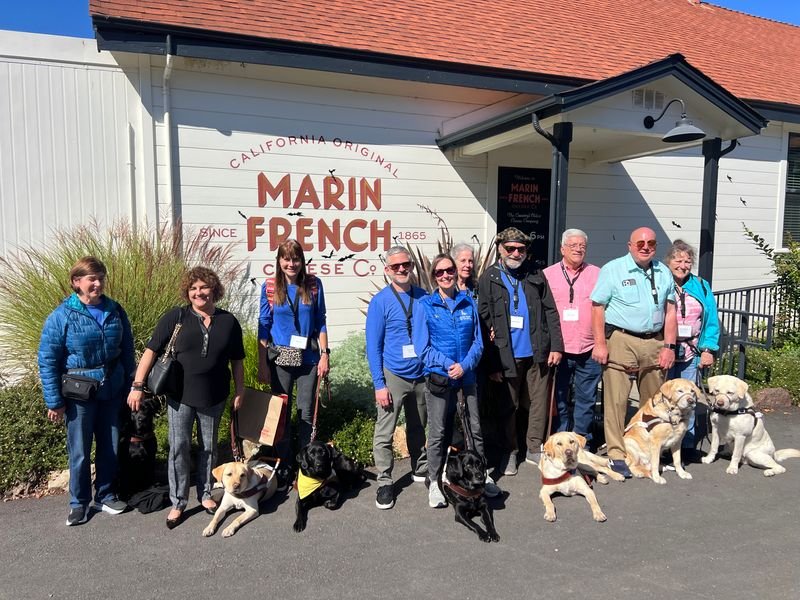
Despite the progress recorded in recent years, a majority of guide dog teams and visually impaired individuals have faced a form of discrimination. 83% of respondents from a 2023 GDB survey revealed that they have experienced rideshare denials, complicating travel for visually impaired individuals.
Doubling down on rights education
A closer look at the operations of Guide Dogs for the Blind points to a focus on rights education. Apart from learning how to work with guide dogs, clients receive in-depth education on their rights by instructors with lessons tailored to states and specific provinces across the US and Canada.
Furthermore, graduated teams still have access to ongoing education and the advocacy team to navigate intricate access issues. Kirsten told Charity Journal that Guidedogs.com has a dedicated advocacy section to support its alumni and the wider community.
“This ongoing work includes dedicated support for our alumni and the vital contributions they make to increase accessibility in their own communities,” said Kirsten. “The resources we create today ensure that both our alumni and the broader community have the tools necessary to advocate for progress every day of the year.”
Meanwhile, GDB advocacy education is shared through multiple channels, including the Central Bark Podcasts, blog posts, quarterly webinars, and newsletters. GDB provides all of its services for free without any government funding, with the nonprofit training over 16,000 guide teams since its launch in 1942.