
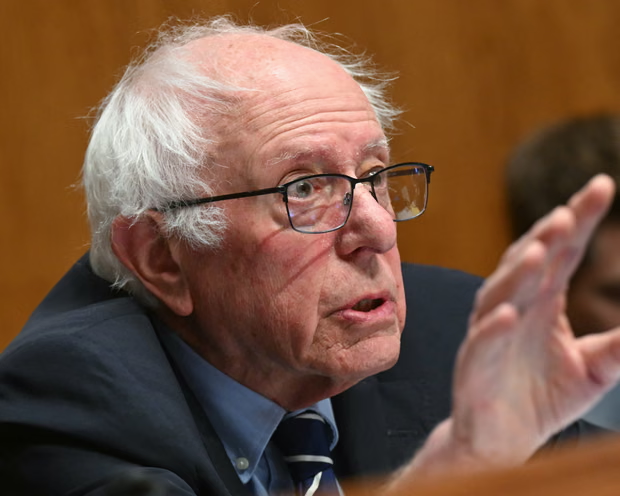

United States lawmakers, Senator Bernie Sanders and Representative Ilhan Omar, unveiled Universal School Meals Program Act legislation. This would provide free breakfast, lunch, dinner, and snacks to every American student regardless of family income.
Universal School Meals Act erases student lunch debt
The Universal School Meals Program Act of 2026 would also erase existing school meal debt. It will also incentivize schools to purchase from local farms and expand summer meal programmes to all communities nationwide.
The legislation arrives as the Trump administration and congressional Republicans push the deepest cuts to federal nutrition programmes in history. Republicans have slashed the Supplemental Nutrition Assistance Programme (SNAP) by $186 billion.
This also imposed harsh new bureaucratic requirements that stripped food assistance from millions of Americans. It also refused to fund SNAP during the federal government shutdown in autumn 2025.
“No child should have to sit in a classroom hungry or worried about where their next meal will come from. As a former nutrition educator and someone who experienced hunger firsthand, this fight is deeply personal to me,” Omar said.
Congress previously funded universal school meals during the COVID-19 pandemic, proving the model increases participation. It also reduces stigma for low-income students and eases family stress.
However, lawmakers allowed the universal model to expire after the 2021–2022 school year.
Nine states lead the way as 48 million Americans struggle with food insecurity
Nine states, Vermont, Minnesota, California, Colorado, Maine, Massachusetts, Michigan, New Mexico, and New York, have since passed their own universal school meal laws. The new legislation would restore the model nationwide.
Representative James P. McGovern, Ranking Member of the House Rules Committee, noted that Massachusetts successfully implemented free universal school meals permanently. He said it has been hugely successful in increasing participation, reducing stigma, and making life a little easier and more affordable for families.
According to the US Department of Agriculture’s most recent food security report, 48 million Americans, including more than 14 million children, face food insecurity. Nearly 40 per cent of SNAP recipients are 18 or younger.
The Act would eliminate school meal debt for every public school student by reimbursing schools and ending harassment of parents over unpaid bills. A 2025 survey by the School Nutrition Association found that nearly 1,400 school districts across the country hold a median of $6,000 in unpaid meal debt.
“Millions of families already face hunger in this country. But with Republicans cutting SNAP and families struggling with the high cost of living, it is even more urgent that we pass the Universal School Meals Program Act.”
The legislation has garnered nearly 100 endorsements. Dozens of House members and 19 senators have signed on as cosponsors.
Meanwhile, a new house bill will help behavioural health specialists tackle the mental health crisis in Oklahoma. The law will remove barriers that prevent these specialists from working in local settings.