

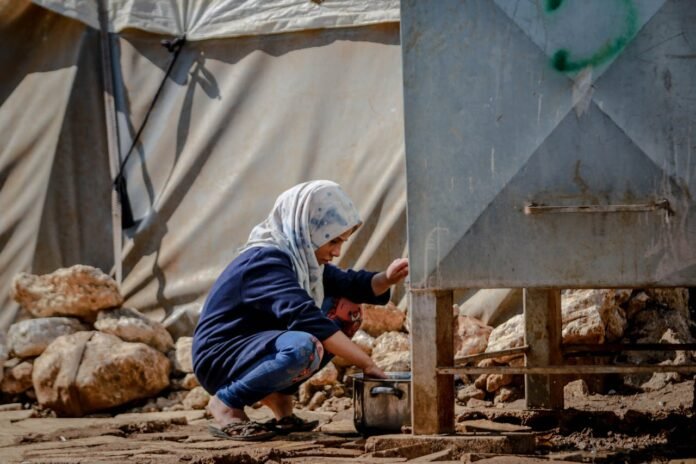

The World Food Programme (WFP) has warned that 45 million additional people could tip into hunger. This is especially if the Middle East conflict does not ease by the middle of the year, with nearly two-thirds living in Africa and Asia.
Supply shocks push prices higher, the World Food Programme warns
The WFP forecasts that the effects of the crisis on food security will likely be felt for months to come. This is a shock to energy and fertiliser markets is already pushing food prices higher.
WFP projected that if the conflict does not ease by mid-year, the global total of people facing acute food insecurity would reach 363 million. This will be the highest level on record.
Corinne Fleischer, WFP Director of Supply Chain, painted a stark picture of the ripple effects.
“When supply chains are disrupted, families feel it at the checkout counter. Delays and higher transport costs push up food prices, and families who spend 50 to 70 percent of their income on food are the first to go without,” he said.
Conflict-linked inflation has already forced the WFP to stop assisting 1.5 million people. This is a figure that could climb sharply in 2026 if operational costs remain high.
Meanwhile, every additional dollar required to deliver assistance means fewer people reached.
Fleischer added that keeping humanitarian supply chains moving was not optional. He noted that they were literal lifelines for millions of people already on the brink of hunger.
Maritime disruptions and fertiliser shortages threaten millions
The WFP warns that this marks the most significant humanitarian supply-chain disruption since the COVID-19 pandemic and the onset of the war in Ukraine. Maritime operations have suffered the most, with ongoing backlogs, delays, and diversions disrupting the flow of food, fuel, and critical supplies worldwide.
The crisis also threatens the world’s 500 million smallholder farmers, most of them in Asia and sub-Saharan Africa. Together, they produce one-third of global food.
Additionally, many now face higher costs and delayed fertiliser shipments just as planting seasons begin. Fertiliser shortages or late deliveries risk smaller harvests, lower incomes, and further pressure on food availability in the months ahead.
In parts of Africa, supply chain disruptions linked to the Middle East and the Red Sea are forcing food and aid shipments to reroute around the Cape of Good Hope.
“Now is the moment for early, collective action before needs spiral beyond our ability to respond,” the WFP urged.
The WFP halted operations recently, warning that ongoing clashes across five counties in Jonglei State have cut off vital aid deliveries, leaving more than 600,000 people facing severe hunger. WFP noted that active fighting continues to obstruct humanitarian access, reaching only 19 percent of its target in the region.