

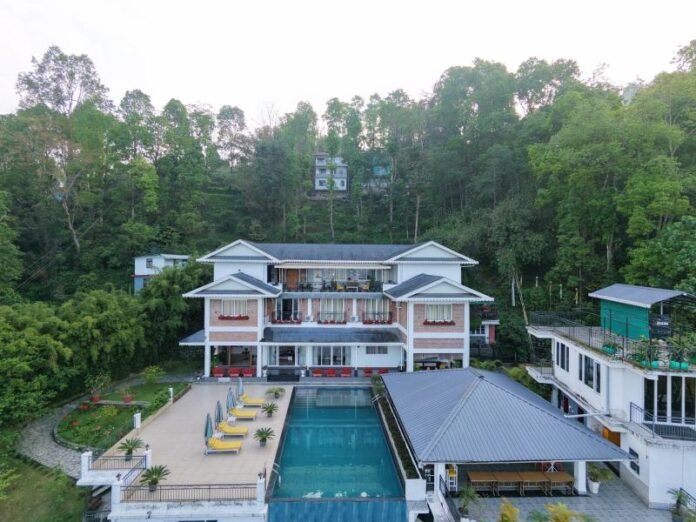

Veda Rehabilitation and Wellness has opened a luxury rehabilitation center in Sikkim, positioning the Himalayan facility as a high-end model for addiction recovery and mental health treatment in India. Founder and CEO Manun Thakur revealed that the organization plans to use lessons from the boutique facility to build affordable mental health solutions for underserved populations.
Veda blends psychiatry with the Himalayan wellness retreat model
The new Sikkim facility marks Veda’s expansion into luxury residential rehabilitation, combining clinical addiction treatment with wellness programming built around the Himalayan environment.
Veda Rehabilitation and Wellness designed the center around medically supervised detoxification, trauma-informed therapy, dual-diagnosis treatment, and long-term relapse prevention support. The facility also integrates mindfulness practices, yoga, and nature-based wellness experiences into treatment plans.
The organization says the location itself plays a central therapeutic role. Situated in the Eastern Himalayas, the retreat uses Sikkim’s high-altitude landscapes, forests, and Buddhist cultural environment as part of its recovery framework.
“We believe that healing is not just clinical. It is deeply personal and profoundly environmental,” said Manun Thakur, Founder and CEO of Veda Rehabilitation and Wellness.
The launch arrives as India faces growing mental health pressures tied to addiction, anxiety, trauma, and burnout, particularly among younger urban populations and professionals.
Veda plans long-term expansion into affordable mental health models
Thakur told Charity Journal in an interview that the luxury facility represents an early-stage testing ground rather than the organization’s final vision for mental healthcare delivery.
He acknowledged that many low-income Indians currently lack access to meaningful mental health treatment beyond medication, complicated by affordability barriers and limited awareness around mental healthcare itself.
“To be honest, the low-income population is not really getting any treatment for mental health concerns,” Thakur said. “Mostly because they are not aware of its existence, and also because the only treatment they can afford is medication.”
Thakur said the organization expects the process of building scalable, affordable mental health systems to take several years as Veda refines treatment models, operational systems, and clinical procedures.
Community outreach becomes part of Veda’s regional strategy
Alongside the launch, Veda says it has begun developing grassroots mental health outreach initiatives across Sikkim.
The organization plans to invite local Alcoholics Anonymous and Narcotics Anonymous groups for facility visits and educational talks while also working with schools to raise awareness around mental health and addiction prevention.
Veda also intends to host workshops focused on daily mental wellness practices and support smaller rehabilitation centers in the region by helping improve operational procedures without increasing costs.
“We are also reaching out to local rehabs and helping them set up better SOPs without increasing costs,” Thakur told Charity Journal.
Meanwhile, the outreach efforts mirror a broader shift among private mental health providers attempting to balance premium treatment models with community engagement and prevention-focused programming.
Meanwhile, Veda said admissions for the Sikkim facility have already opened, with the organization limiting capacity to preserve privacy and individualized care for residents.