

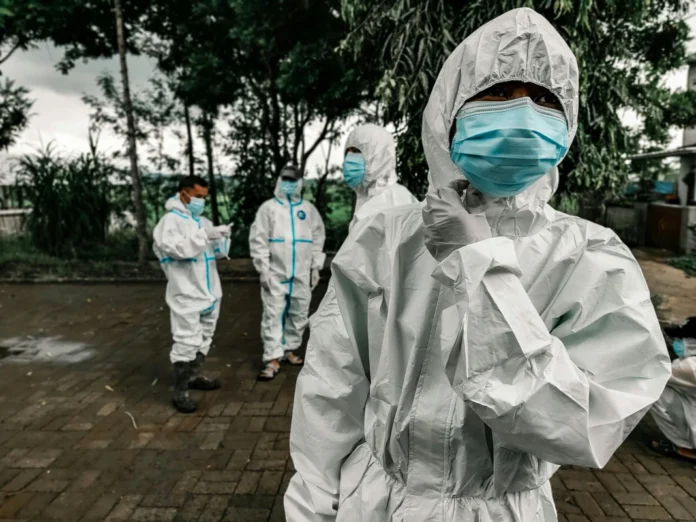

The International Federation of Red Cross and Red Crescent Societies (IFRC) is expanding its Ebola response in the Democratic Republic of the Congo amid dire conditions. The aid organization is now seeking $37 million to fund its containment response in the region.
IFRC deploys volunteers and launches emergency appeal
The IFRC said it is scaling up response efforts in eastern DRC and neighboring countries while launching a CHF 29 million ($37 million) regional emergency appeal to support containment operations.
According to the organization, the DRC Red Cross Society has deployed 200 volunteers across the Bunia and Rwampara health zones, where teams are conducting community outreach, public health education, and frontline response activities. Volunteers are also going door-to-door to combat misinformation and encourage people to seek medical care when symptoms appear.
The Ebola outbreak in the Democratic Republic of the Congo (DRC) continue to escalate, with cases and deaths continuing to rise as the virus spreads across multiple provinces and into neighboring Uganda.
With the support of the @IFRC, teams from @Croix_Rouge_RDC are on the… pic.twitter.com/8Y9NYZCBH6
— IFRC (@ifrc) May 31, 2026
In posts shared on X, the IFRC highlighted the role of local volunteers in helping communities understand how Ebola spreads and why early detection remains critical.
The humanitarian network said volunteers have also supported safe and dignified burials while working with local health authorities to strengthen community engagement efforts. However, responders continue to face major challenges, including fear and pockets of distrust in remote regions.
The outbreak involves the Bundibugyo strain of Ebola, which currently has no approved vaccine or specific treatment. Health officials have warned that the virus has already spread beyond eastern DRC into neighboring Uganda.
Other aid groups expand emergency operations
As the outbreak grows, international health and humanitarian organizations are joining the IFRC to increase support across affected areas.
The World Health Organization (WHO) has delivered emergency medical supplies, protective equipment, tents, and treatment materials to support response efforts in both DRC and Uganda. Additionally, WHO teams are strengthening surveillance systems, contact tracing operations, laboratory capacity, and cross-border preparedness measures.
Meanwhile, United Nations agencies have mobilized logistics support and emergency health resources to help local authorities contain the outbreak. Aid workers have focused on improving preparedness in high-risk communities while supporting frontline health facilities facing mounting pressure.
Samaritan’s Purse also announced plans to open a 50-bed Ebola treatment unit in northeastern DRC. The organization said the facility will provide treatment capacity while working with local churches and community leaders to improve public trust and awareness.
However, the IFRC warns that the outbreak is spreading faster than response efforts in some areas. Violence, displacement, attacks on health facilities, and funding shortfalls have disrupted containment work, raising concerns that the crisis could worsen without stronger international support.