
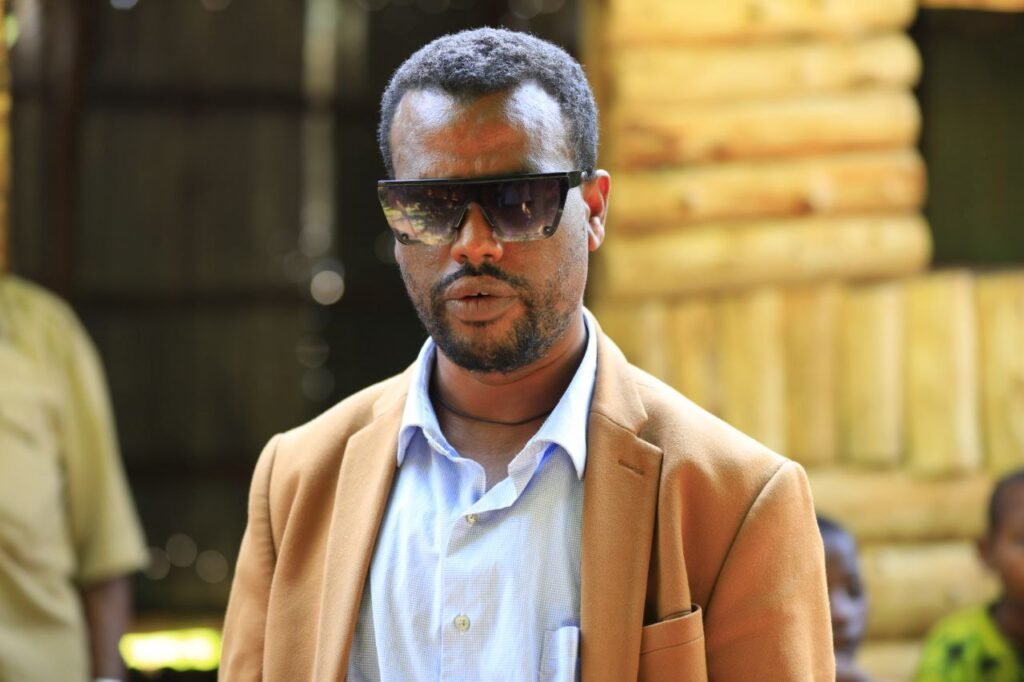
Tsehaynew Ademe lost his sight at 5. He now runs the Inclusive Humanitarian Organisation (IHO), a nonprofit serving thousands of disabled individuals in Ethiopia. His work exposes a gap that treaties, summits, and decades of global commitments have failed to close.
Inclusive Humanitarian Organization is changing the disability narrative
In many parts of Ethiopia, disability is still misunderstood. Deeply rooted cultural beliefs often link disabilities to spiritual causes, creating stigma that pushes people with disabilities to the margins of society.
In rural communities, limited awareness and widespread poverty combine to create barriers that prevent millions from accessing education, healthcare, employment, and community life.
For the Inclusive Humanitarian Organization (IHO), these realities are not abstract policy challenges but are the daily obstacles faced by the people the organization serves.
Founded on the belief that every individual deserves dignity, opportunity, and participation, IHO has evolved from a disability-focused education initiative into a broader humanitarian organization working to address the interconnected challenges that keep people with disabilities trapped in cycles of exclusion.
Inclusion beyond the classroom
For years, disability advocates have emphasized the importance of education. Yet IHO’s leadership recognized that education alone cannot solve the challenges facing people with disabilities.
A child may gain access to a classroom, but if that child’s family lives in poverty and if community members view disability as a curse, educational gains can quickly disappear.
“The move from focusing solely on disability education to a broader humanitarian mandate stems from the recognition that education is only one piece of a much larger puzzle,” says IHO Founder and Executive Director Tsehaynew Ademe.
Today, the organization’s approach focuses on creating inclusive ecosystems rather than isolated interventions. IHO has since racked up small wins with its community awareness campaigns and streaks of vocational training programs in rural Ethiopia.
Most importantly, people with disabilities are encouraged to participate in local decision-making processes, shifting perceptions away from charity and toward active citizenship.
This integrated model recognizes that inclusion cannot exist in one sector alone. It must be present in schools, workplaces, healthcare systems, public spaces, and community leadership.
Tsehaynew Ademe: Leadership shaped by lived experience
The philosophy behind IHO is deeply connected to the personal journey of its founder.
Tsehaynew lost his sight at the age of five following a combination of improper traditional practices and dire circumstances within his family and community. Rather than remaining limited by disability, Tsehaynew leaned on the setback as the foundation for a lifetime of advocacy.
Navigating a world designed primarily for sighted people required resilience, adaptability, and determination. Those experiences shaped his understanding of the barriers facing people with disabilities and informed the organization’s commitment to practical, community-centered solutions.
Rather than accepting exclusion, he pursued education through primary school, secondary school, and university, eventually earning a degree in Leadership. His development as a leader was further strengthened through the Young African Leaders Initiative (YALI), where he attended Civic Leadership training at the University of Virginia in 2018.
His experiences also inspired him to write and publish three books focused on the lives, challenges, and achievements of people with disabilities. Today, he leads IHO with a philosophy rooted in empowerment rather than sympathy.
“Advocacy is central to my mission,” he explains, emphasizing the importance of challenging stigma, promoting disability rights, and designing programs that reflect the realities experienced by people with disabilities themselves.
Technology, strong partnerships, dedicated staff, and a network of volunteers enable him to lead effectively while demonstrating that disability is not a barrier to impact.
When crisis strikes, exclusion deepens
Ethiopia regularly faces humanitarian emergencies ranging from conflict and displacement to natural disasters and public health crises. While these events affect entire communities, people with disabilities often face disproportionate risks.
Disrupted infrastructure can leave them unable to access food, shelter, healthcare, or protection. Dependence on caregivers may increase vulnerability to neglect, abuse, and exploitation. Humanitarian responses frequently overlook accessibility, leaving many excluded from aid distribution and recovery efforts.
IHO has spent years responding to crises, particularly among internally displaced populations.
Its emergency interventions begin by identifying the specific needs of people with disabilities, ensuring they are not invisible during response planning. The organization advocates for disability inclusion, promotes gender equity, and supports access to sanitation and hygiene services while working to preserve dignity and protection during emergencies.
Inclusive Humanitarian Organization is challenging harmful misconceptions
One of the greatest barriers to disability inclusion in Ethiopia remains perception.
Many communities continue to associate disability with spiritual conditions or personal misfortune. These beliefs often lead to discrimination, and children with disabilities are particularly affected.
School enrollment rates remain low, and many who do enroll eventually drop out due to inaccessible learning environments, inadequate support systems, and persistent stigma. At the moment, inclusive education is in its early stages in many parts of the country.
IHO works to challenge these misconceptions by promoting disability awareness, advocating for rights-based approaches, and demonstrating the capabilities of people with disabilities through education and community engagement.
The goal is not merely acceptance but recognition of the value and contributions people with disabilities can bring to society when barriers are removed.
Lemlem’s Story: From Survival to Hope
Perhaps no story illustrates IHO’s impact more clearly than that of 21-year-old Lemlem Legese Nadew.
Born in Ethiopia’s Sidama region, Lemlem lost her eyesight at the age of five. Her parents struggled to accept her disability, and family challenges soon followed. Her parents divorced, her father became bedridden, and financial hardship prevented her from attending school.
For 15 years, she remained at home without access to education.
A church elder eventually helped relocate her to a town where she could attend school, but tragedy struck again. While living in rented accommodation, she was raped and later gave birth to a son.
Forced to abandon her education once more, Lemlem survived through begging while raising her child alone. Her future appeared uncertain and bleak, but things began to change when Ethiopia Aid and Inclusive Humanitarian Organization intervened.
Through an educational support initiative, Lemlem received Braille paper, a Braille writing frame, voice-recording tools, and counseling services. These resources allowed her to return to school and resume her studies in Grade 6.
Today, she is rebuilding her confidence and pursuing an education that once seemed impossible.
“I’ll study with one thought if I find someone who can cover my house rent, my child’s tuition, and my monthly food allowance. Tomorrow, I will have my own job and income,” said Lemlem
Yet significant challenges remain. Her rented home lacks access to water, forcing her to walk daily to a river while carrying a bucket and navigating with a white cane. The journey exposes her to physical danger and the risk of further violence.
Her story reflects the intersection of disability, poverty, gender inequality, and trauma. It also demonstrates the transformative power of targeted support. With continued assistance, Lemlem hopes to complete her education, secure employment, and build a stable future for herself and her son.
What Inclusive Humanitarian Organization needs most
Despite the progress being made, the challenges for the nonprofit remain immense.
IHO estimates that nearly 17% of Ethiopia’s population lives with some form of disability. Many continue to face poverty, limited access to services, inadequate infrastructure, and social exclusion.
As a community-driven organization, IHO is working to expand its reach and deepen its impact. However, meaningful progress requires more than commitment alone.
The organization needs stronger partnerships, greater public awareness, expanded resources, and sustained collaboration across sectors. Tsehaynew told Charity Journal that disability inclusion cannot be achieved by one organization acting alone.
It requires governments, nonprofits, communities, donors, and development partners working together to build systems where people with disabilities can participate fully and contribute meaningfully.
For IHO, the vision is to build a society where disability is not viewed as a limitation but as a natural part of human diversity, and where every person has the opportunity to live with dignity, independence, and purpose.
The journey toward inclusion is far from complete, but organizations like IHO are proving that lasting change begins when communities move beyond charity and embrace true participation.