
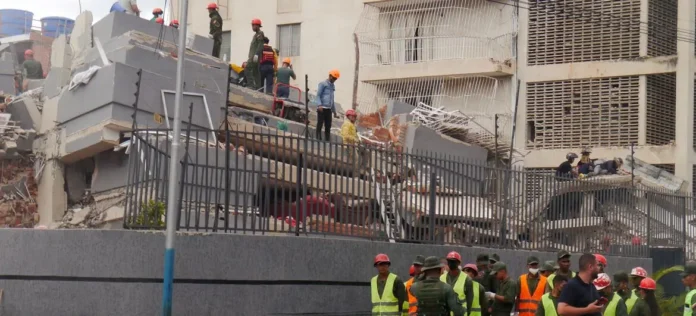

Medical experts and Venezuela aid workers are warning that a secondary health crisis is building in the aftermath of twin earthquakes that killed at least 2,295 people on June 24. Thousands of survivors remain in overcrowded temporary shelters with little access to clean water or functioning sanitation, creating conditions that specialists say are ripe for rapid disease spread.
A healthcare system already on the brink
The earthquakes struck a country whose public hospitals were already failing long before the disaster. Venezuela’s medical association estimates that roughly one-third of the country’s 60,000 registered physicians have left since its economic crisis began in 2013, and a 2025 national survey found shortages of more than 30 percent of emergency supplies and over 70 percent of operating room materials.
“We’ve already gone through a period of complex trauma, which will continue to occur, but now it’s complicated by infections,” said Eugenio Cova, head of the trauma unit at Hospital Jose Gregorio Hernandez in Caracas.
Laboratories across the country are “all practically closed or do the basic things only,” according to Huniades Urbina of Venezuela’s paediatrics association, who said the earthquakes exposed the government’s inability to maintain an adequate healthcare system. Aid workers on the ground in La Guaira reported residents already experiencing diarrhoea and seeking portable toilets and government support to reduce shelter overcrowding.
Venezuela Earthquake Death Toll Nears 2,300
Nine days after the June 24 twin earthquakes, the death toll has risen to 2,295, with 11,267 injured.
Nearly 50,000 people remain missing.
Pray for Venezuela 🇻🇪 pic.twitter.com/DWDphmgFXI
— Ryan Rozbiani (@RyanRozbiani) July 2, 2026
“It’s like a scene from a movie or from a war zone. We have never seen this in peacetime,” said Kevin Simm, a volunteer aid worker, drawing direct comparisons to the situations in Gaza and Ukraine. Organizations that specialize in this kind of compounding crisis, including those listed among the nonprofits providing disaster relief around the world, typically warn that the weeks after a major earthquake carry as much risk as the initial event.
US military joins Venezuela aid operation as damage tops $6.7bn
The United States has deployed approximately 900 military personnel to Venezuela to support relief and rescue efforts, alongside 100 State Department staff. US forces repaired an earthquake-damaged runway at Venezuela’s main international airport near Caracas to allow humanitarian supplies to land, and stationed naval vessels off the country’s coast to support the operation.
The Trump administration has committed $300m in assistance, channeled through aid groups and the United Nations. That figure, however, represents a fraction of the estimated $6.7bn in material damage identified through satellite analysis by the UN Development Programme.
Around 50 international rescue teams have arrived from countries including Ecuador and Israel, which maintain no diplomatic relations with Venezuela. Rescuers continue to find survivors beneath the rubble, including a toddler pulled out alive after six days on Tuesday. The scale and complexity of the response reflects a broader challenge that emergency infrastructure experts have increasingly flagged, as explored in Charity Journal’s coverage of organizations pioneering emergency response infrastructure in 2026.