
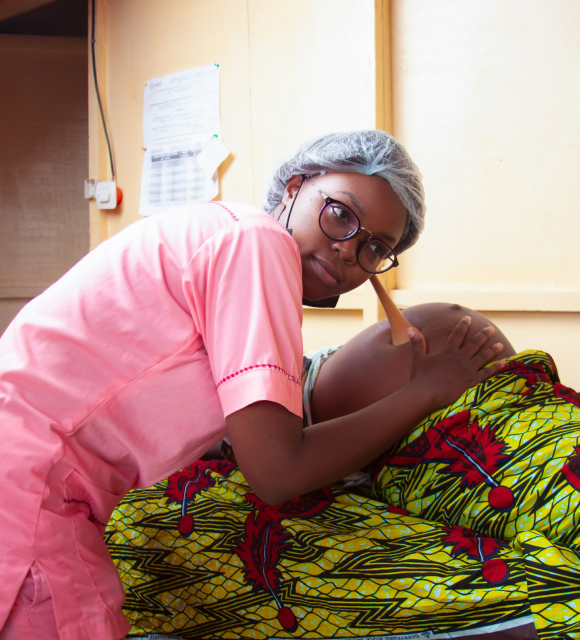

MRH Collective has achieved a 99.9% maternal survival rate for thousands of women across Lagos State, offering a rare success story in Nigeria’s ongoing maternal health crisis. Charity Journal sat down with the MRH Collective team to learn how community-based care and sustained follow-up are reshaping outcomes for mothers.
MRH Collective tackles the challenge head-on with MamaBase
In Nigeria, giving birth remains one of the most dangerous things a woman can do. Behind that fact is a staggering figure that over 70,000 Nigerian women died from pregnancy-related causes in 2025 alone.
It is against this backdrop that the Maternal and Reproductive Health (MRH) Collective, founded in 2007 by Professor Bosede Afolabi, a consultant obstetrician who grew tired of watching preventable deaths, built a model that is considered a possible blueprint for the country. In a recent conversation with Charity Journal, MRH Collective spoke candidly about how that model works and what it will take to grow it across Nigeria.
The clearest expression of that model is MamaBase, a community-based maternal health program that has registered 7,883 pregnant women across all 20 local government areas of Lagos State. By the end of its first phase, the program recorded a 99.9% survival rate among that cohort, a figure that would be remarkable in any health system, let alone one operating in some of Lagos’s most underserved communities.
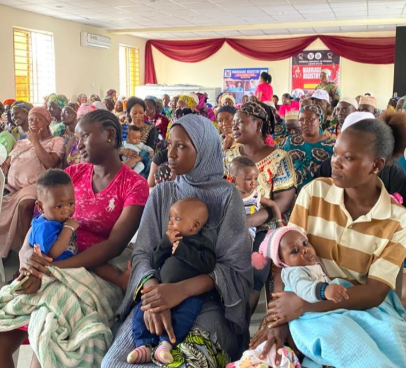
Numbers like that invite a natural question: what is actually happening on the ground to produce them? The answer has less to do with any single medical breakthrough and more to do with reach. The team disclosed that getting to women earlier, staying with them longer, and removing the financial and informational barriers yielded tremendous success.
One woman’s story, shared with the Collective and reproduced with her identity withheld, underscores the extent of the program’s success.
She was pregnant, unsupported by the child’s father, and following her mother’s example, headed toward a traditional birth attendant rather than a clinic, because that was what women in her family had always done. A community health worker doing outreach for MamaBase intervened, walking her through the benefits of delivering at a Primary Healthcare Centre instead. From there, MamaBase covered her ultrasound scans and blood tests, and when complications made a cesarean section necessary, covered that too. She delivered a healthy baby boy.
It is a story that illustrates what MRH Collective’s staff describe, in their conversation with Charity Journal, as their central task. The nonprofit intercepts the decisions, often made out of cost or a lack of information, that put women at risk in the first place.
That interception happens through a fairly unglamorous combination of tools. MRH Collective relies on subsidized antenatal registration and a network of community health workers making follow-up calls throughout a woman’s pregnancy.
Maintaining a high standard of care
Asked what allows the organization to maintain that standard of care, MRH Collective’s team pointed to who is doing the work. The majority of its staff are women, physicians, nurse-midwives, social scientists, community educators, and advocacy specialists, who have lived and worked across different parts of Nigeria and understand, from the inside, the cultural terrain a pregnant woman has to navigate.
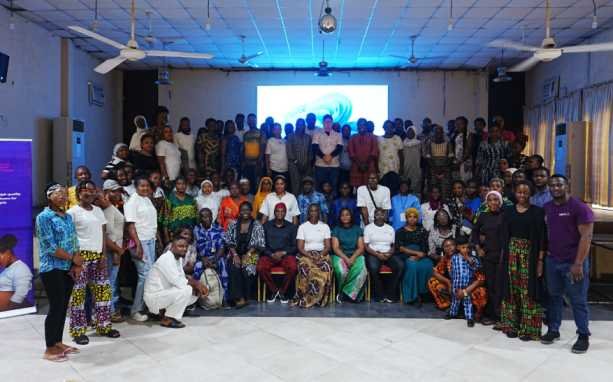
Furthermore, the organization ingrains the mantra that no woman should die from a preventable cause in its staff and volunteers.
Whether MamaBase’s results can travel beyond Lagos is the harder question, and one the Collective seems to have anticipated from the start. Sustainability was built into MamaBase from inception, including a distinct planning phase that involved cost-effectiveness analysis, workshops with local stakeholders, and a deliberate transition strategy to integrate with existing government health systems.
The Collective’s stated ambition is scale-up recommendations that policymakers can actually use in other high-burden states, a considerably harder goal than simply replicating MamaBase wholesale.
The organization’s other flagship effort, the Iyaloju Initiative, tackles the quality of care once a woman arrives at a facility. Through Respectful Maternity Care training, which the Collective has extended to over 2,000 primary healthcare staff, clinical and non-clinical alike, the goal is to shift frontline workers away from a mode of care shaped almost entirely by workload pressure.
In many facilities, dismissive communication, skipped informed consent, and coercive decision-making function as coping mechanisms for high patient loads and thin staffing rather than as deliberate mistreatment. Changing that requires more than a refresher course. The Collective’s approach leans on reflective practice and scenario-based discussion, aiming for a gradual shift toward person-centered care that treats women as participants in their own decisions.
Taken together, MamaBase and Iyaloju address two connected problems: getting women into the health system and ensuring the system treats them well once they arrive. The Collective’s published goal is a 30% reduction in maternal mortality by 2030, a target that will require far more than one Lagos-based program can deliver alone.
The data from this first phase suggest that community trust, consistent follow-up, and system-level accountability, combined, can dramatically improve outcomes. The real test now is whether that combination holds up as it scales beyond the communities where it was built.