

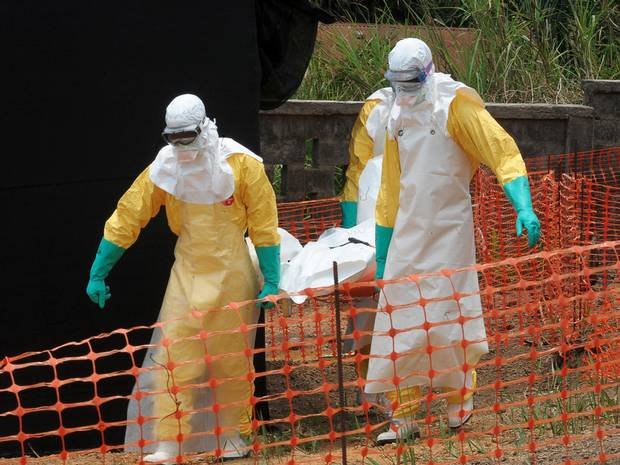

China has announced a new wave of emergency humanitarian assistance to Africa as the Ebola outbreak caused by the Bundibugyo virus continues to spread across the Democratic Republic of the Congo and Uganda, with the death toll rising and international pressure for a stronger coordinated response intensifying.
High-level meeting signals Beijing’s deeper engagement
On June 16, Chinese Vice Premier Liu Guozhong addressed a High-Level Meeting of African Heads of State and Government and Partners on the Ebola outbreak via video link, signaling Beijing’s intent to deepen its involvement in the crisis response. Liu invoked President Xi Jinping’s concept of a “community with a shared future for humanity” as the framework guiding China’s engagement, framing the Ebola response as a test of that vision in practice.
#ChinaAfricaTalk As the DRC confronts a new #Ebola outbreak, a Chinese medical expert team is working alongside local counterparts to support containment efforts and build long-term response capacity. Ambassador Zhao Bin to the DRC discusses the latest situation and China’s… pic.twitter.com/xeLTyUMV3W
— CGTN Radio (@CGTNRadio) June 17, 2026
Speaking through the meeting, Liu stressed that China and Africa have “always been a community with a shared future” and announced that China would implement its Partnership Action for Health under the Forum on China-Africa Cooperation to deliver further assistance. China has already provided emergency humanitarian aid to both the DRC and the African Union Commission, and dispatched medical expert teams to the DRC, with close to a thousand Chinese medical professionals now on the ground working alongside African health workers.
The first Chinese anti-epidemic medical team arrived in Kinshasa on June 2 for a three-month mission. A representative of the DRC Ministry of Health welcomed the team at the airport, describing China’s deployment as timely and strong support for the Congolese government and people.
Outbreak continues to worsen
The scale of the crisis has grown significantly since the DRC officially declared the outbreak on May 15, marking the country’s 17th recorded Ebola episode. As of June 16, the DRC had reported 808 confirmed cases and 192 confirmed deaths, with the Ituri province accounting for the vast majority at 738 cases across 20 health zones. Uganda had reported 19 confirmed cases and two deaths.
The Bundibugyo strain driving this outbreak is particularly challenging because there is no licensed vaccine or approved treatment for it. Armed conflict in eastern DRC, widespread population displacement, and restricted humanitarian access in Ituri have further complicated containment efforts, while the US Ebola response has surpassed $162 million since the start of the year, drawing comparisons to what other donors have committed.
China urges broader international solidarity
Beyond its own pledges, Beijing called on the wider international community to take concrete steps to help Africa defeat the outbreak. Chinese Foreign Ministry spokesman Lin Jian told reporters that China would stay in close contact with the DRC, other affected African countries, the WHO, and the African Union, and would scale assistance in line with developments on the ground.
China has dispatched 45 medical teams comprising more than 900 members to 44 African countries as part of its longer-standing health cooperation framework with the continent. That track record has formed the basis of Beijing’s argument that its engagement in Africa on health security is consistent and structural, not merely reactive.
The outbreak was declared a public health emergency of international concern by WHO on May 17, and the aid workers scandal that emerged from MSF’s operations in Chad has cast an additional shadow over how humanitarian organizations manage emergency responses in conflict-affected zones across Africa.