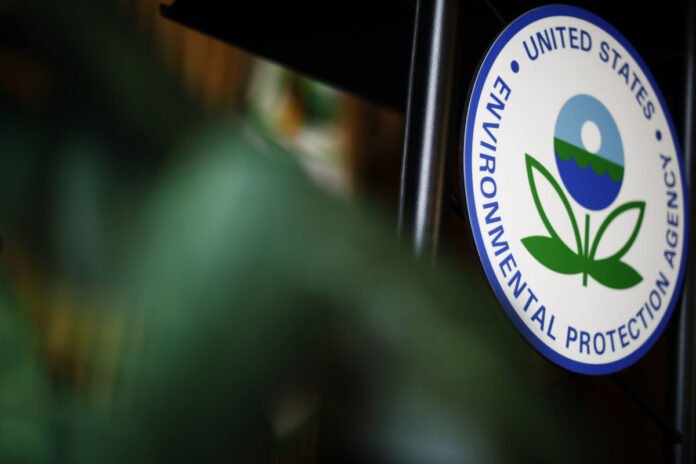

The EPA Gulf of America Division Farmer-to-Farmer grants channel federal funding directly to organizations working alongside farmers, ranchers, and forest landowners to test and scale innovative conservation methods on actively managed land. The program puts producers at the center of the solution, funding on-the-ground collaboration that generates real data, reduces nonpoint source pollution, and builds lasting agricultural resilience across the Gulf of America watershed.
About the Farmer-to-Farmer Conservation Grants Program
Administered by the EPA’s Gulf of America Division (GAD), a non-regulatory arm of the agency, the Farmer-to-Farmer program operates as a cooperative agreement structure where primary recipients administer competitive subaward programs to place funding directly with farming communities. The National Association of State Departments of Agriculture (NASDA) Foundation is one of four partners currently administering subawards on behalf of EPA under a $3 million cooperative agreement, with 14 sub-awardees already selected from across the watershed.
Funding Size
Awards made directly by EPA to primary recipients:
- Typical award range: $250,000 to $1,000,000 per cooperative agreement
- Typical project period: up to five years
- Total estimated funding per competitive cycle: approximately $3 million to $10 million depending on appropriation
Who Can Apply
For primary EPA cooperative agreements:
- State agencies and state departments of agriculture
- Federally recognized tribes and tribal consortia
- Local government agencies and instrumentalities
- Nonprofit organizations
- Interstate agencies
- Colleges and universities
For-profit entities and individuals are not eligible to apply directly to EPA. Sub-award eligibility is determined by each administering partner’s own solicitation requirements.
Geographic Eligibility
- United States only, within the Gulf of America watershed
- The watershed spans states across the South and Midwest draining into the Gulf
- Project activities must be consistent with state nutrient reduction strategies and regional resource management documents
Sector or Thematic Focus
- Water quality improvement through innovative nutrient and runoff reduction methods
- Habitat restoration including riparian zone improvement, wildlife corridor protection, and wetland preservation
- Sustainable forestry practices that protect water quality and biodiversity
- Conservation tillage, cover cropping, and nitrogen-use efficiency on cropland
Read Also: The South African Reserve Bank (SARB) Information Technology Internship 2026 – Apply Now
Application Process
Eligible organizations submit applications through Grants.gov using the relevant Notice of Funding Opportunity (NOFO). Applicants must have active SAM.gov registrations prior to submission. Primary award recipients then design and administer their own competitive subaward process to place funds with qualifying farm-focused organizations and individual producers within the watershed. Data collected during funded projects must document methods, outcomes, and environmental results, with findings shared broadly to inform future conservation decisions.
Required Materials
- Complete application package addressing all elements specified in the NOFO
- Project workplan not exceeding the page limit specified in the relevant solicitation
- Detailed budget narrative with itemized costs and justification
- Documentation of SAM.gov registration
- Description of data collection methodology and environmental results framework
- For subaward applicants: materials specified by the relevant administering partner
Key Dates
- Application opportunities are announced periodically through Grants.gov; there is no single fixed annual cycle
- Award timelines vary by funding round; recent cycles have targeted project start dates approximately six months after the application close
Read Also: Politecnico di Torino PhD Scholarships 2026- Apply Now
Selection Notes
- Projects must involve new, novel, or experimental techniques rather than standard established practices
- Landowners must receive data from their own properties to support ongoing farm management decisions