

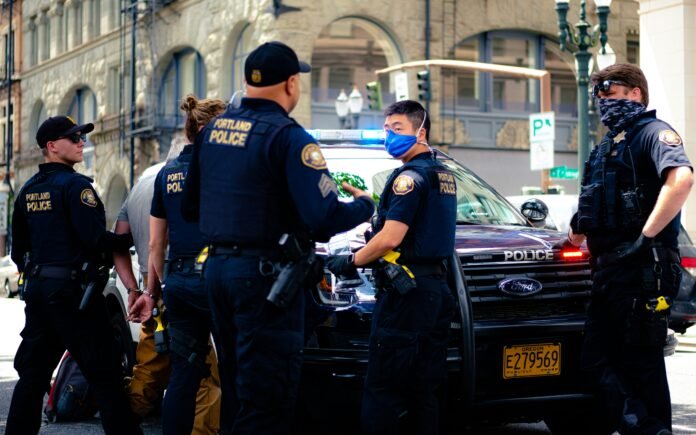

A new student initiative at Yale University is challenging the Police Department’s role in responding to student mental health emergencies. The initiative argued that trained mental health professionals, not armed officers should handle wellness checks on campus.
YCARE campaign challenges Yale Police role in mental health emergencies
The Yale Collective for Abolition, Resistance and Education (YCARE) is a student organisation focused on criticising the prison system. The group seeks to fundamentally change how the university responds to students in distress.
Pollack-Johnson ’27, a co-founder of YCARE, said their thought is that for a lot of people. He explained that it would be more beneficial to have a trained mental health professional instead of an armed officer.
In an emailed statement to the Yale Daily News, acting Assistant Chief John Healy defended the department’s role.
“Yale Police respond to mental health calls on the Yale campus to help maintain a safe environment while ensuring individuals in crisis receive appropriate care and attention,” Healy wrote.
He added that although a mental health crisis is not a criminal matter, officers are often called for a wellness check. This is especially when someone’s behaviour raises concern that they may harm themselves or others.
Healy added that Yale police officers, including those with Crisis Intervention Team training, work closely with clinicians. They also work with campus resources to connect individuals with appropriate services.
Yale’s website lists several 24/7 emergency services for students in crisis. This includes the Department of Mental Health and Counselling, Acute Care, SHARE, and 9-1-1.
YCARE registered as a student organisation in the fall of 2024, according to Pollack-Johnson. This semester marks the group’s first as a Dwight Hall provisional member group, a designation that grants access to funding, supplies, and publicity.
Abolitionist Collective Pushes ‘YPD Out’ Proposal for Next Semester
Jacinda Webber ’28, another YCARE member, said the group is questioning how much they want to engage with police. Webber said this is because their identity as an explicitly abolitionist collective is really important.
Both Webber and Pollack-Johnson recounted a member who witnessed their suitemate experience a police-involved wellness check.
“It really shocked me that YPD was involved at all in wellness checks because it just seemed like a mismatch as far as skillset and the mood that that would bring to such a sensitive situation,” Webber said.
However, YCARE has encouraged students to submit testimonials about their experiences with Yale police via email and fliers across campus. Pollack-Johnson estimated the group has received five to seven responses through a Google Form.
She noted that students have reported both positive and negative interactions with YPD. The group is brainstorming ways to reduce the presence and need for YPD on campus.
Meanwhile, next semester, YCARE plans to introduce a proposal to the Yale College Council advocating for the “YPD Out” campaign. The Yale Police Department remains the oldest college police department in the United States.
In another development, the University of Montana Police Department’s dog, Amira, will receive protective equipment after a large donation from a charitable organization. Amira, the K9, has become popular among the local community with multiple calls for wider support.