
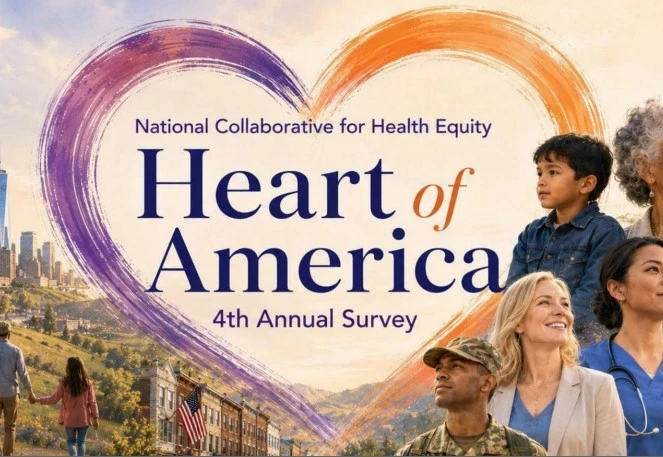

A majority of Americans still believe in the nation’s founding ideals, but far fewer think those values are reflected in their daily lives, according to a new national survey released by the National Collaborative for Health Equity (NCHE). The nonprofit revealed that it is using the findings to equip policymakers and grassroots leaders with data to help rebuild trust in democratic institutions and strengthen community-based racial healing efforts.
NCHE survey reveals widening confidence gap
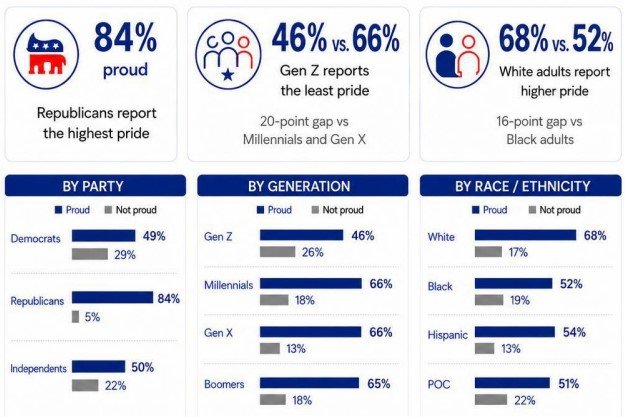
The National Collaborative for Health Equity (NCHE), a nonprofit that advances health equity and racial justice, surveyed 1,322 adults across the United States ahead of the country’s 250th anniversary. While 62% of respondents said they are proud to be American, only 36% believe the country is living up to its ideals of freedom, fairness, and equal opportunity.
The findings suggest many Americans continue to embrace the country’s founding principles while questioning whether public institutions are delivering on those promises. The survey also found that 52% of respondents believe the American Dream is now out of reach, with rising costs of groceries, housing, healthcare, and wages driving much of that pessimism.
In response to questions from Charity Journal, NCHE said it is working to ensure the findings reach beyond academic audiences and influence public decision-making. NCHE said it also distributed the findings to more than 13,000 policymakers, public officials, community advocates, and civic leaders through its professional networks while archiving the full dataset at the Roper Center for Public Opinion Research for researchers and pollsters.
Communities seek practical ways to rebuild trust
The survey found broad agreement on democratic values despite growing concerns about representation. Nearly nine in ten respondents said every eligible American should have the right to vote, yet only 11% believe current voting maps fairly represent communities.
Political division, racism, and poverty emerged as the leading barriers to national unity, while 85% of respondents said Americans are hungry to reconnect, belong, and trust one another again.
Asked what grassroots organisations can do to address declining trust, NCHE pointed Charity Journal to programmes that prioritise dialogue and community leadership over political messaging.
The organisation said its Rx Racial Healing Circle methodology equips trained facilitators to help communities build trust through structured conversations. NCHE also operates leadership programmes and communities of practice that support local organisations working to advance racial healing and health equity.
Leadership programmes target systemic inequities
NCHE told Charity Journal that its flagship Culture of Health Leadership Institute for Racial Healing is shifting its focus to immigration and voting rights as part of a new 12-month virtual programme. The initiative uses the Truth, Racial Healing and Transformation framework to prepare practitioners tackling systemic inequities in their communities.
The fourth cohort will include 20 leaders selected from across the United States. Participants will receive a $10,000 stipend, along with mentoring, coaching, and technical resources to strengthen their community-based work. Rather than treating the survey as a snapshot of public opinion, NCHE said it views the findings as a guide for future action.