



Project Tomorrow has found that 70% of K-12 parents worry their children are not learning the skills needed for future success, highlighting growing concerns about career readiness and the role of technology in education. The findings come from the nonprofit’s 23rd Annual Speak Up Report, which draws on responses from more than 95,000 students, educators, administrators and families across rural, urban and suburban schools.
Parents want schools to prioritize practical skills
The 2026 report, titled What’s Tech Got To Do With It?, found that parental concern about future-ready skills has increased by 17 percentage points since 2023-24 and 63% since 2020.
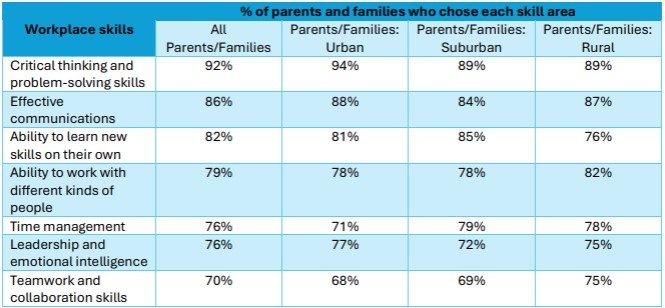
Parents identified critical thinking and problem-solving as their highest priorities, with 92% highlighting these skills. Effective communication followed at 86%. The findings also point to growing expectations for schools to connect classroom learning with real-world demands.
Some 48% of high school students said they want classes that teach skills relevant to future jobs, while 76% of parents favor instruction focused on problem-solving rather than rote memorization.
Technology has become an important part of those expectations. Per the report, 85% of parents believe effective use of instructional technology is critical to their children’s future success, while 48% explicitly want schools to use technology purposefully.
Dr. Julie Evans, CEO of Project Tomorrow, said parents are increasingly concerned about whether schools are equipping children with the right skills.
“Technology isn’t a substitute for traditional learning. However, when it’s used effectively, it helps students develop durable skills, makes teachers more effective, and modernizes the learning experience in ways that could never have been done before,” Evans said.
Students increasingly explore AI outside the classroom
The report also highlights a widening role for artificial intelligence in students’ learning experiences.
Around 46% of high school students now learn AI tools through self-directed experimentation outside school, a 16-percentage-point increase from 2023-24. By comparison, 30% participate in AI-related classroom activities.
Students’ experiences with AI also vary geographically. Suburban high school students reported the highest levels of AI engagement and optimism, with 54% saying AI could explain concepts in ways that make more sense to them. The comparable figures for students elsewhere were between 42% and 43%.
Teachers also reported benefits from instructional technology. Per the report, 70% disclosed technology makes learning more interactive, while 56% said it helps them personalize instruction.
Rural teachers reported particularly strong benefits in supporting independent learning. Meanwhile, 62% said technology helps students develop skills for lifelong, self-directed learning, compared with 45% of suburban teachers.
Two decades of research reach millions of education stakeholders
Project Tomorrow said corporate sponsorships cover 50% of the operational costs of its Speak Up Research Project, with revenue from contracted research projects accounting for the remaining half.
The nonprofit generates this revenue through research assignments for companies, foundations, nonprofit organizations, associations, and school districts.
The initiative initially received funding from the US Department of Education before transitioning to philanthropic support from corporate foundations. Over the past decade, its primary funding sources have shifted to corporate sponsorships and contracted research revenue.
Project Tomorrow has provided participating school districts with free access to locally collected data and comparative state and national findings every year since 2003. The organization says equal access is central to its mission of helping schools make better decisions regardless of their financial resources.
The nonprofit also tracks how districts use its research through website analytics, dashboard activity, local data retrieval, content downloads, and inquiries about its analytical tools. It supplements these measurements with interviews with district leaders about how Speak Up findings influence their technology planning and instructional decisions.
The Speak Up Research Project has collected more than 6.4 million stakeholder responses since 2003, making it one of the largest collections of stakeholder perspectives on digital learning.