

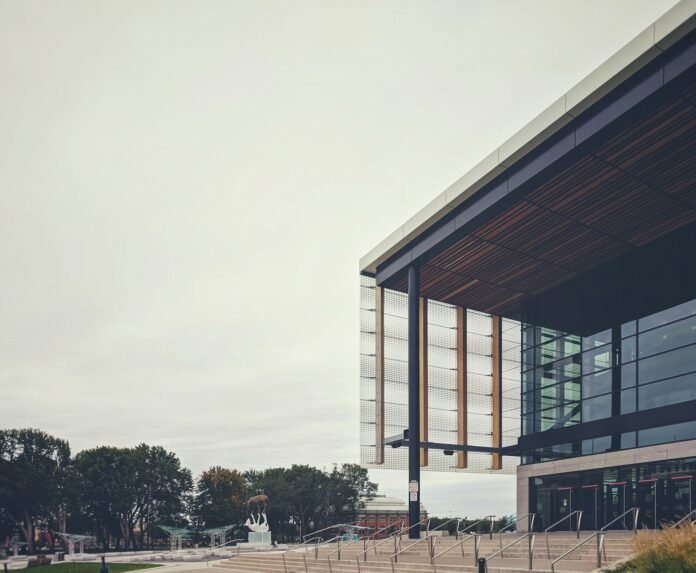

The D’Andre D. Lampkin Foundation has announced plans to build a Center for Community Resilience in Ontario, California. D’Andre Lampkin, founder of the organization and a Los Angeles County Deputy Sheriff, noted that communities that fail during disasters are those that neglect proper preparations.
Building before the next disaster, says the Lampkin Foundation
Lampkin told Charity Journal that the center’s planning draws directly from the Inland Empire’s history of recurring disasters, including wildfires, earthquakes, extreme heat, and large-scale displacement. The 2025 Los Angeles wildfires, the most expensive in US history at over $60 billion in damage, crystallized the argument for him.
For Lampkin, recovery is a long-term process that continues long after emergency responders leave, and cameras move on.
The 2025 Southern California wildfires displaced thousands, strained emergency response services, and exposed how quickly community-led volunteer networks become the primary safety net when formal systems are overwhelmed. The Inland Empire, which sits adjacent to the fire-prone mountains of San Bernardino and Riverside counties, faces persistent exposure to the same conditions.
The proposed center will house emergency preparedness education, disaster response coordination, volunteer mobilization infrastructure, a community food pantry, and youth leadership programs. Lampkin envisions the facility operating every day, serving families navigating the slower-moving emergencies of food insecurity, housing instability, and economic disruption.
“Communities don’t fail during disasters; they fail long before them, when we neglect to prepare, invest, and build systems that can withstand adversity,” said Lampkin. “The Center for Community Resilience is about building something permanent that strengthens people, not just in moments of crisis, but every day.”
From exhibits to everyday readiness
Lampkin told Charity Journal that the center’s interactive learning exhibits will connect historical disasters directly to practical action. Major events, including the San Francisco earthquake, Hurricane Katrina, September 11th, and the 2025 Los Angeles wildfires, will anchor the exhibits as case studies in how communities responded, recovered, and rebuilt.
Each exhibit will connect a historical lesson to a specific resilience strategy families can apply in daily life, covering emergency planning, food and water readiness, financial preparedness, and neighborhood support networks. Furthermore, the design philosophy reflects Lampkin’s belief that disaster preparedness and economic resilience are the same conversation, not separate programs.
California’s Listos program, anchored at the Governor’s Office of Emergency Services, reached nearly four million low-income, disabled, and non-English-speaking Californians with disaster preparedness education between 2019 and 2021, demonstrating the scale of demand for accessible community-level preparedness resources. The Lampkin Foundation aims to fill a permanent version of that role in Ontario with its proposed center
Meanwhile, the center remains in its development phase, with stakeholder engagement and site selection still ahead. Lampkin intends the Ontario facility to serve as a proof of concept for a model he believes other regions can replicate, particularly communities that face recurring disaster risk without the infrastructure to absorb it.